
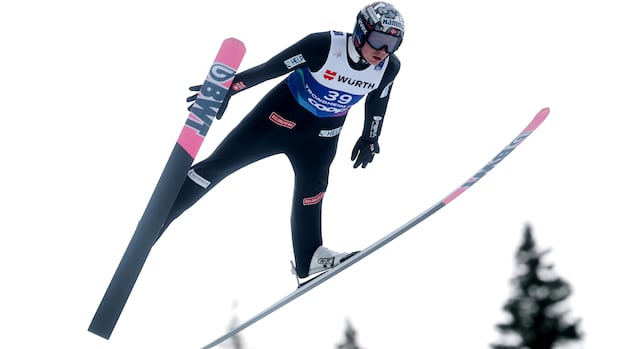
In ski jumping, the difference between winning an Olympic medal and disqualification can be as subtle as a slight alteration in the athlete’s suit. A larger suit can enhance a ski jumper’s flight distance, but it may breach strict regulations established after the Norwegian team’s scandal at the previous world championships. The team was found guilty of manipulating the crotch area of their top male jumpers’ uniforms.
To ensure fair play at the upcoming Milan Cortina Winter Games, regulators have implemented new measures. Ski jumping, considered both an art and science, involves rigorous testing of equipment and clothing in wind tunnels to optimize aerodynamics long before the jump itself.
A recent study revealed that increasing the circumference of a suit by just 1 cm could potentially add 2.8 meters to a jump, a significant advantage in a sport where every meter counts. The scandal involving the Norwegian team highlighted the lengths some athletes and officials would go to gain an unfair advantage.
Following the scandal, the International Ski Federation (FIS) has revised its rules and introduced stricter monitoring of athletes’ gear. New regulations include enhanced 3-D measurements of athletes in their uniforms before each event, as well as the use of tamper-proof microchips to prevent unauthorized alterations to suits. Any violation of equipment rules will result in penalties, similar to soccer’s yellow and red card system.
After the scandal, Norway made changes to its team leadership, appointing a new head coach to rebuild the team’s reputation. The coach acknowledges the increased scrutiny on the team this season and emphasizes the importance of adhering to the sport’s regulations and standards.