
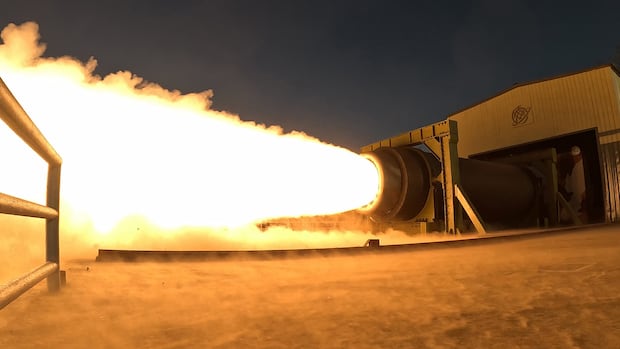
North Korean leader Kim Jong-un oversaw a trial of a high-thrust, solid-fuel engine and praised it as a advancement to enhance the country’s strategic military capabilities, state media disclosed on Sunday. The test suggests Kim’s determination to expand and modernize an arsenal of missiles capable of reaching the mainland United States.
The Korean Central News Agency (KCNA) released the report on Sunday following Kim’s speech at North Korea’s parliament, where he vowed to firmly establish his country as a nuclear power and accused the U.S. of global “state terrorism and aggression,” likely referring to conflicts in the Middle East.
According to KCNA, Kim personally witnessed the ground test of the newly upgraded engine utilizing a composite carbon fiber material. The engine’s maximum thrust is reported to be 2,500 kilotons, an increase from the previous test in September which recorded about 1,971 kilotons.
Observers suggest that the effort to enhance the engine power is linked to plans to equip single missiles with multiple warheads, heightening the chances of overcoming U.S. defense systems.
The test details, including the timing and location, were not disclosed by KCNA. The test was conducted as part of a five-year military enhancement program, aiming to upgrade the country’s “strategic strike means,” as reported by KCNA. This is believed to indicate the development of nuclear-capable, intercontinental ballistic missiles targeting the continental U.S.
Kim emphasized the significance of the latest engine test in elevating the country’s strategic military capabilities to the highest level, as reported by KCNA.
In recent years, North Korea has conducted various ICBM tests showcasing the potential to reach the U.S. mainland, including missiles with solid propellants that make pre-launch detection more challenging. The country’s older liquid-fuel missiles require fueling before launch and have a limited shelf life.
While some foreign experts highlight technological challenges North Korea faces in developing a functional ICBM, such as ensuring warheads survive atmospheric reentry conditions, others argue that the country’s extensive investment in nuclear and missile programs suggests otherwise.
Since the breakdown of high-stakes diplomacy between Kim and former U.S. President Donald Trump in 2019, North Korea has intensified efforts to expand its nuclear arsenal. In a Workers’ Party congress in February, Kim hinted at the possibility of dialogue with Trump but urged the U.S. to abandon demands for North Korea’s nuclear disarmament as a precondition for negotiations.