
An individual was killed in southern Lebanon as a result of an Israeli drone attack on Friday, which marked the beginning of a United States-mediated ceasefire between Israel and Hezbollah. Paramedics and a local hospital confirmed the incident. Shortly after, President Donald Trump announced that the U.S. had prohibited Israel from further bombing in Lebanon, emphasizing an end to the ongoing hostilities.
Hezbollah refrained from attacking Israeli targets upon the ceasefire’s initiation but did not openly endorse the agreement. The group attributed the ceasefire to Iranian pressure on the U.S. President Trump stated that any future deals with Iran would not involve Lebanon directly but assured that the U.S. would address the situation involving militant Hezbollah appropriately.
Following Trump’s remarks, Iran’s Foreign Minister Abbas Araghchi declared that the Strait of Hormuz was fully open for commercial vessel passage throughout the ceasefire period. Trump’s announcement of the 10-day ceasefire between Lebanon and Israel raised hopes of a potential resolution to the concurrent conflict between the United States and Iran.
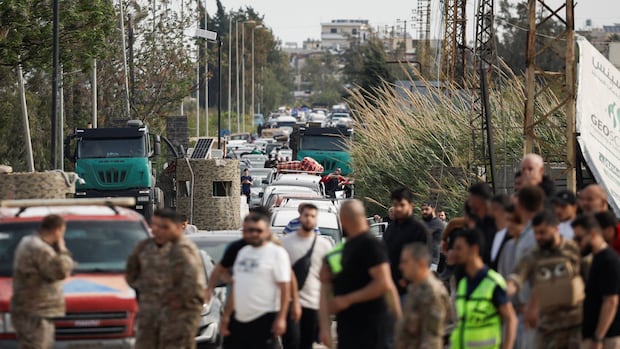
Displaced individuals in Lebanon began returning to their war-torn towns and neighborhoods, finding many homes destroyed or uninhabitable. Uncertainty lingers as the ceasefire does not mandate Israel to withdraw troops from occupied southern regions, where Israeli forces continue to demolish alleged Hezbollah-utilized structures.
Hezbollah, backed by Iran, emphasized its right to resist, while the Lebanese army reported Israeli ceasefire violations, including sporadic shelling of several southern Lebanese villages, urging citizens to postpone their return to the affected areas.
In the southern suburbs of Beirut controlled by Hezbollah, devastation was evident with ruined buildings and a lingering stench of death. Residents expressed reluctance to return immediately due to the inhospitable conditions. Meanwhile, makeshift crossings over the Litani River facilitated movement after Israel destroyed major bridges during the conflict.
The conflict, which erupted on March 2 when Hezbollah targeted Israel in support of Iran, has resulted in numerous casualties and displacements. Lebanon’s Health Ministry reported over 2,000 deaths, thousands of injuries, and 1.2 million displaced individuals, underscoring the severe toll of the violence on civilians.
Israeli Defense Minister Israel Katz disclosed plans to maintain a “security zone” extending into Lebanon until Hezbollah militants and weaponry are cleared from the area. Lebanese President Joseph Aoun emphasized that any future agreements would not compromise Lebanon’s territorial integrity or national rights.
Efforts to restore peace in Lebanon face challenges, with Hezbollah’s disarmament posing a potential risk of further conflict in a nation scarred by past civil unrest. Trump mentioned plans to host talks between Israeli Prime Minister Benjamin Netanyahu and President Aoun at the White House to facilitate meaningful discussions between the two nations.