
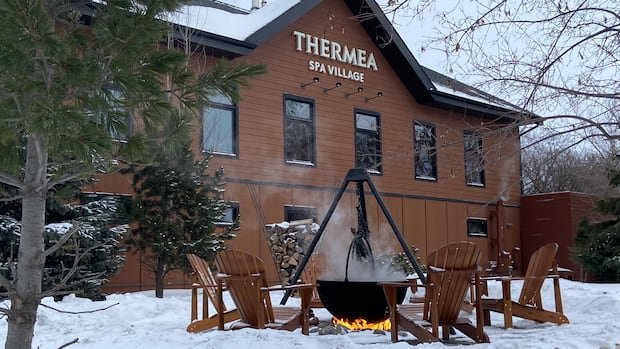
The owner of Winnipeg’s Thermea spa has withdrawn a customer survey that contained what one patron described as “extremely inappropriate” inquiries, such as questioning whether immigration poses a threat to “the purity of the country.” Amelia LaTouche, a customer at Thermea, expressed her concerns to CBC News after receiving the survey via email following her visit to the spa in late December. LaTouche criticized the survey, stating that it was not the appropriate platform for questions of a political or cultural nature.
The survey, sent by the spa’s parent company, Groupe Nordik, and conducted by the Centre for Research on Public Opinion (CROP), aimed to gather feedback to enhance the spa’s services. However, LaTouche highlighted questions in the survey that she found offensive and inappropriate, such as one suggesting that more government involvement would benefit society and another insinuating that immigration threatens the country’s purity.
LaTouche emphasized that the survey lacked the option to skip questions or decline to answer, and she found the language used in some questions to be sexist and potentially divisive. She expressed concerns that the survey could be interpreted as promoting negative perceptions of immigration, which contradicts Thermea’s image as a diverse and inclusive establishment.
Following LaTouche’s feedback, Groupe Nordik issued an apology, acknowledging that the questions in the survey did not align with the company’s values. The company admitted to oversight in vetting the survey questions, leading to their removal and implementing stricter approval processes for future surveys. Alexandre Boileau, Groupe Nordik’s senior marketing director, emphasized the company’s commitment to creating a respectful and inclusive environment for all guests.
Despite the apology, LaTouche expressed a desire to further discuss the matter with Thermea. She also pointed out that CROP had faced criticism in the past for similar survey questions, questioning the value of such inquiries that could potentially perpetuate harmful opinions.