
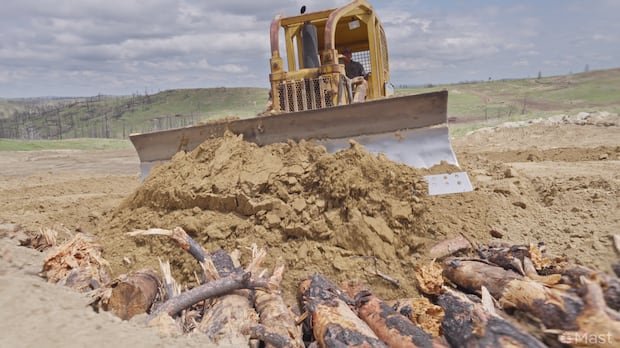
In our weekly newsletter, we shed light on environmental trends and solutions leading us towards a more sustainable future. As a child, I spent time burying things in the ground, never realizing the climate implications. Recently, Johanna Wagstaffe and I explored the concept of burying trees destroyed in wildfires to trap their carbon emissions.
This week’s highlights include the potential of burying burnt wood post-wildfires to combat climate change, the impact of a heat wave on western U.S. snowpack, and China’s strides in electric vehicle (EV) adoption as Canada gears up to embrace these cars.
The idea of burying burned trees to prevent massive carbon release post-wildfires emerged in 2013 when researchers uncovered an ancient red cedar log near Montreal, preserving 95% of its carbon content. This finding sparked interest in carbon storage through burying dead or burnt trees.
Mast Reforestation, a Washington-based company, undertook a large-scale wood burial project in Montana, burying around 10 million pounds of burnt trees from a 2021 wildfire. This innovative approach not only stores carbon but also funds reforestation efforts through the sale of carbon credits.
While the concept shows promise, concerns arise regarding its impact on ecosystems. Researchers emphasize the need for a structured approach to carbon burial to ensure its effectiveness and environmental responsibility.
In another context, a recent heat dome in the western U.S. triggered record-low snowpack levels, fueling concerns of a severe fire season due to drier landscapes and flammable trees. The early snowmelt has extended the fire season, posing challenges for regions like Colorado, Nebraska, and California.
Furthermore, China’s advancements in EV technology, particularly in battery-swapping stations, reflect a significant transformation in the automotive industry. As Canada opens its doors to Chinese EVs, debates arise over the potential benefits for EV adoption and infrastructure, juxtaposed with concerns about industry competition and data security.
The evolving landscape of carbon burial practices, climate impacts on snowpack, and the global shift towards EV adoption present complex environmental challenges and opportunities for sustainable solutions.
For further insights, visit the provided source link.