
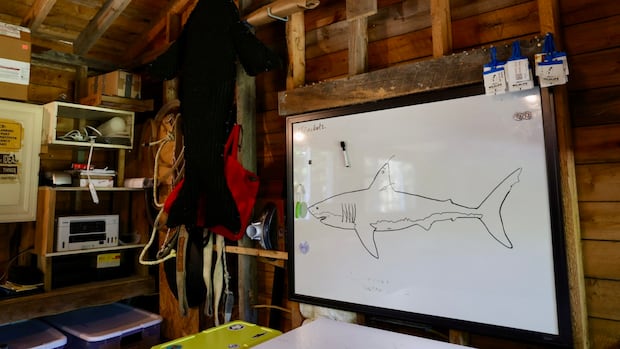
A team of researchers is conducting a study on white sharks off the coast of Nova Scotia at a new field station on an island. Led by Nigel Hussey, a professor at the University of Windsor, the team is using various tracking technologies to monitor the movement of white sharks. Last year, they tagged 16 white sharks, and the 2026 tagging expedition is set to launch this weekend.
The field station has introduced a tracker that allows the public to follow the tagged sharks from 2025 and those tagged in 2026. However, the research is facing challenges due to Canada’s permitting system for working with these animals.
Hussey expressed concerns about the current lack of infrastructure to handle white sharks in Atlantic Canada. The Tancook Islands Marine Field Station was established by Hussey and his wife after he participated in a tagging expedition by Ocearch in 2018, which led to the discovery of more white sharks than anticipated.
The research aims to uncover migration patterns, congregation areas, population size, and ecological impact of white sharks in the region using various tagging methods, including satellite tags. Despite making progress in understanding white shark movement, obtaining permits from Fisheries and Oceans Canada remains a hurdle.
Hussey highlighted the challenges posed by the current permitting system, which complicates efforts to conduct long-term monitoring of white sharks in Atlantic Canada. Despite these obstacles, the field station is seen as a valuable asset for the local community and aims to educate the public about sharks while contributing to economic growth on the island.