
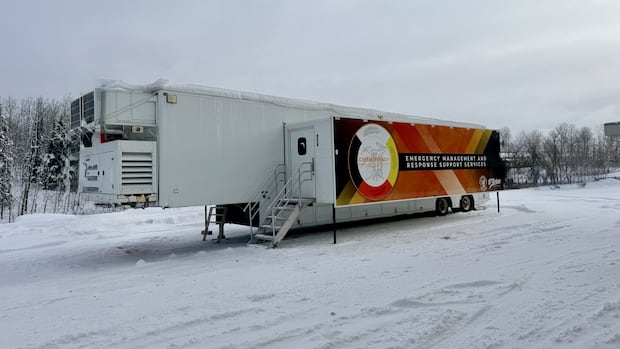
A company predominantly owned by Kashechewan First Nation has established a mobile clinic in Kapuskasing, Ontario, to deliver medical services to evacuees from the community. The evacuations from Kashechewan started in early January following a state of emergency declaration by Chief Hosea Wesley due to a water treatment plant malfunction, leading to a lack of clean water. Over 1,900 out of the 2,300 residents have been relocated to various cities in Ontario like Kapuskasing, Timmins, Kingston, and Niagara Falls.
Christopher Thind, the director of health for Kashechewan, mentioned that the community introduced Creemergency last year to enhance control over regular evacuations, particularly due to the annual flood threats. Instead of the usual practice where vendors are selected by the federal government and the provincial Ministry of Emergency Preparedness and Response for evacuations from remote First Nations communities, Creemergency has partnered with the O’Briens Corporate Group in Kapuskasing to manage medical services for evacuees.
The primary goal is to alleviate the pressure on local healthcare resources, including the Sensenbrenner Hospital, as acknowledged by Thind, who emphasized the importance of providing complementary services to the existing facilities. The mobile clinic in Kapuskasing has received 81 evacuees for medical attention, reflecting an efficient use of resources and reducing the burden on the hospital system.
Volunteers, including registered nurses and nurse practitioners from the Canadian Medical Assistance Teams, are staffing the facility. Agnico Eagle, the mining company operating the Detour Lake Gold Mine near Kapuskasing, contributed $50,000 to support the mobile clinic, demonstrating solidarity with First Nations communities during crises. Andre Leite, the vice-president of Agnico Eagle’s Ontario operations, highlighted the significance of ensuring prompt access to essential health services for displaced families.
While there are no immediate plans for similar clinics in other host cities, the possibility of relocating the clinic to Cochrane if necessary has been considered by Thind. The larger size and enhanced healthcare capacity of these cities compared to Kapuskasing make them better equipped to handle the current situation.