
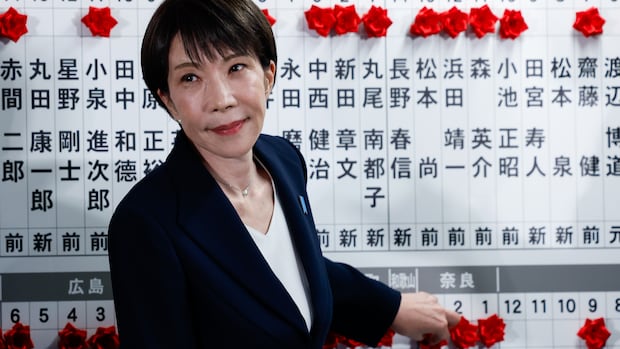
The political party led by Prime Minister Sanae Takaichi achieved a two-thirds supermajority in a significant parliamentary election held on Sunday, as reported by Japanese media citing initial results, marking a substantial victory due to her widespread popularity.
In a televised discussion with NHK after her overwhelming success, Takaichi expressed her readiness to implement policies aimed at strengthening and enriching Japan.
According to NHK’s vote count results, Takaichi’s Liberal Democratic Party (LDP) secured 316 seats by early Monday, comfortably exceeding the absolute majority threshold of 261 seats in the 465-member lower house, which holds more power in Japan’s bicameral parliament. This achievement is a record for the party since its establishment in 1955, surpassing the previous high of 300 seats won in 1986 by the late Prime Minister Yasuhiro Nakasone.
With an additional 36 seats gained through its new ally, the Japan Innovation Party, Takaichi’s ruling coalition now holds a total of 352 seats.
Beaming with joy, Takaichi adorned a signboard at the LDP headquarters with a large red ribbon above each winner’s name, while party executives applauded her efforts.
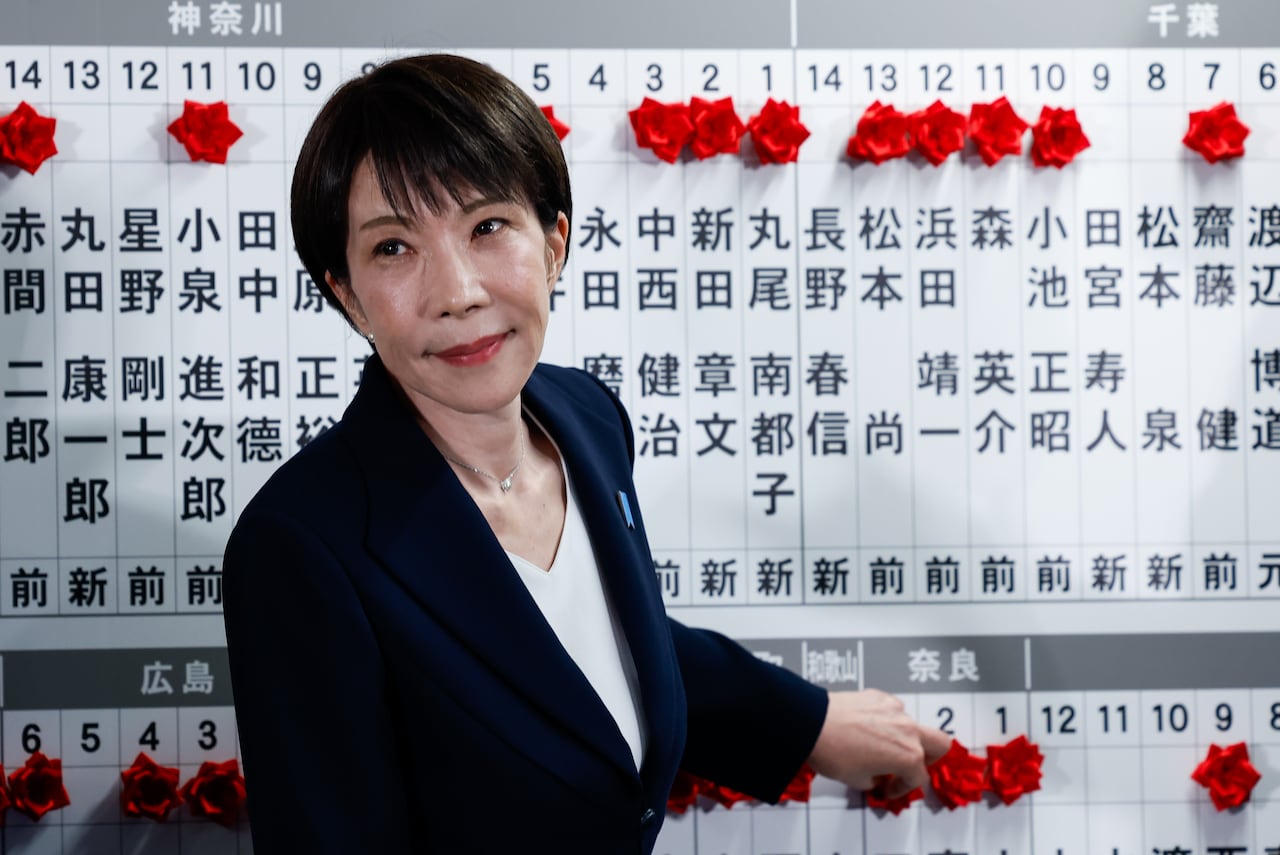
Sanae Takaichi, Japan’s prime minister and president of the ruling Liberal Democratic Party, puts pins marking the names of candidates who won lower house elections at party headquarters in Tokyo on Sunday. (Kim Kyung-hoon/The Associated Press)
Although the ruling party does not hold a majority in the upper house, the significant increase from its pre-election standing in the lower house will enable Takaichi to advance her right-wing agenda, which is focused on enhancing Japan’s economy and military capabilities amid rising tensions with China while also fostering relations with the United States.
Takaichi indicated her intention to seek support from opposition parties while steadfastly pursuing her policy objectives.
“I will remain adaptable,” she stated.
While Takaichi enjoys significant popularity, the LDP, which has been in power for most of the last seventy years, has faced challenges related to funding and scandals involving religious organizations in recent times. She called for this early election just three months into her term, hoping to capitalize on her high approval ratings.
The ultraconservative Takaichi, who assumed office as Japan’s first female prime minister in October, committed to “work, work, work,” and her approach, which is viewed as both playful and assertive, has resonated with younger constituents who previously showed little interest in political matters.
Despite the emergence of a new centrist coalition and a growing far-right presence, the opposition remains too fragmented to pose a genuine threat. The newly formed opposition alliance, which includes the LDP’s former coalition partner, the Buddhist-affiliated Komeito, and the liberal Constitutional Democratic Party of Japan, is projected to drop to half of their combined pre-election total of 167 seats.
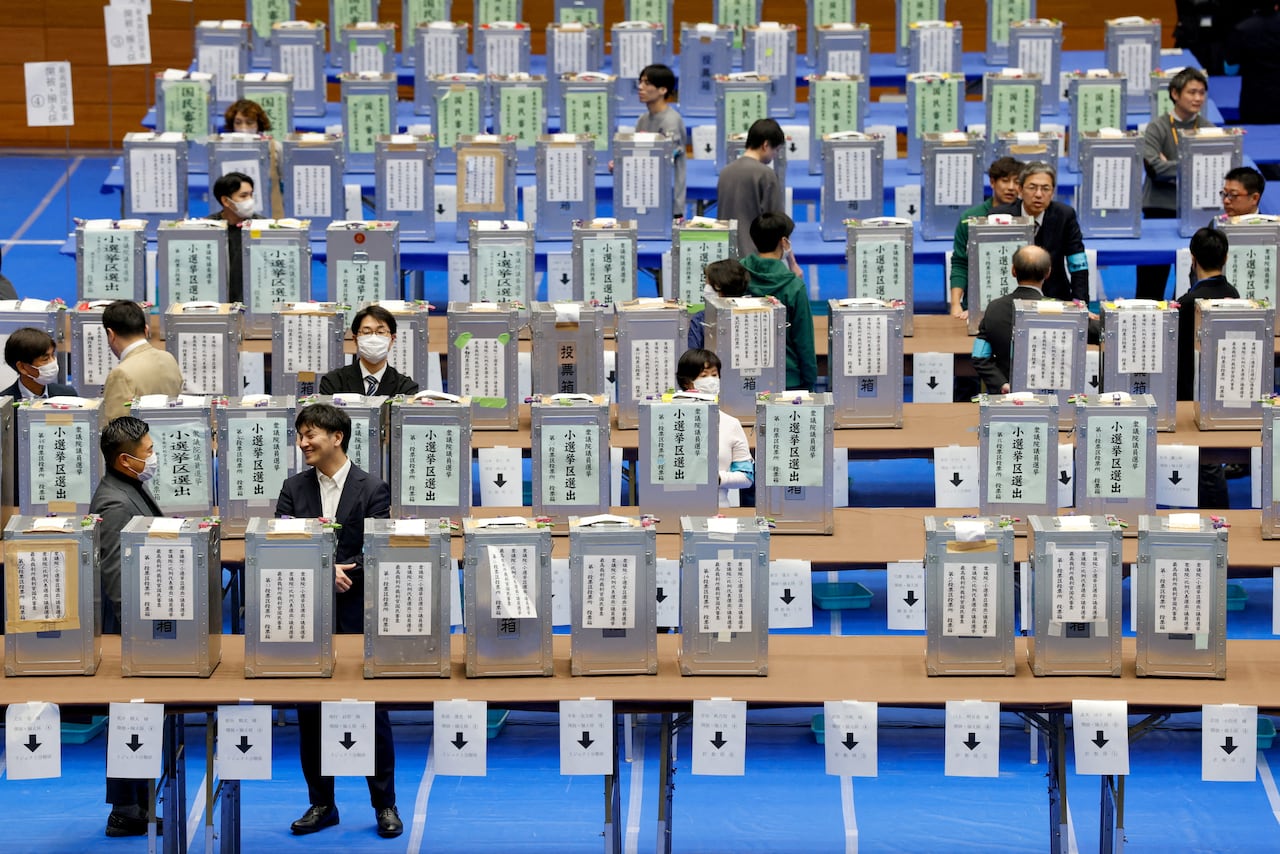
Election officials gather near ballot boxes at a counting centre in Tokyo on Sunday. (Manami Yamada/Reuters)
Takaichi was banking on this election to secure a majority for her LDP party, in conjunction with its new ally, the JIP.
Akihito Iwatake, a 53-year-old office worker, expressed his approval of the LDP’s significant win, feeling that the party had leaned too liberal in recent years. “With Takaichi steering things back toward conservatism, I believe that contributed to this favorable outcome,” he remarked.
Takaichi’s Policies
The prime minister aims to implement a notable shift toward the right in Japan’s security, immigration, and other policy areas. The LDP’s right-wing ally, JIP leader Hirofumi Yoshimura, has indicated that his party will act as an “accelerator” for this transition.
Recently, Japan has witnessed a rise in far-right populism, exemplified by the anti-globalist and increasingly popular Sanseito party. Exit polls suggested a significant increase in support for Sanseito.
Upon the lower house’s reconvening in mid-February, Takaichi’s primary responsibility will be to address a budget bill, which was postponed due to the election, aimed at funding economic initiatives to combat rising costs and stagnant wages.
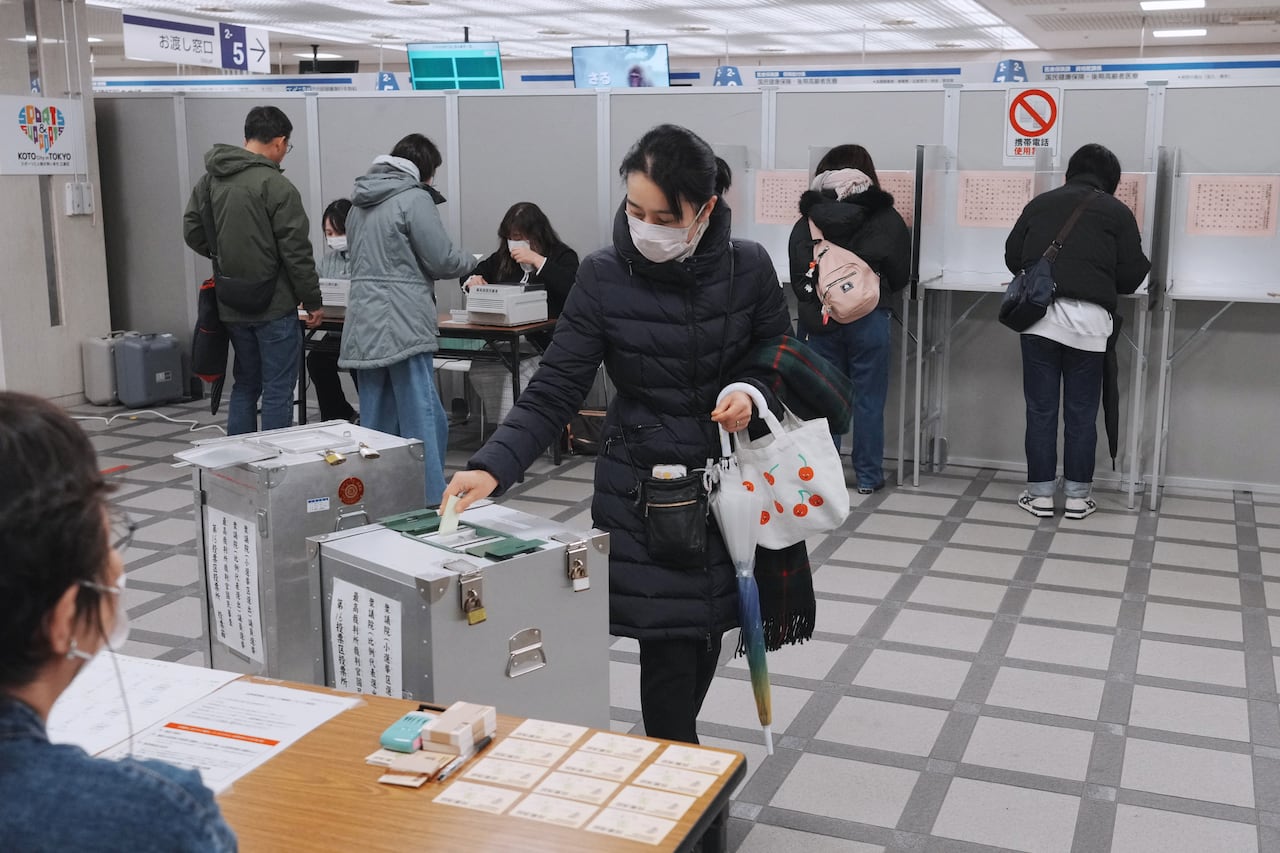
People vote at a polling station in Tokyo on Sunday. (Kazuhiro Nogi/AFP/Getty Images)
Takaichi has committed to revising security and defense policies by December to enhance Japan’s offensive military capabilities, including lifting the ban on weapons exports and distancing the country from its postwar pacifist principles.
She is advocating for stricter regulations concerning foreigners, anti-espionage measures, and other policies that appeal to a far-right audience, but experts warn these could infringe on civil liberties.
Additionally, Takaichi seeks to increase defense spending in response to U.S. President Donald Trump’s urging for Japan to open its financial resources.
She now has the opportunity to implement these policies without the pressure of an election until 2028.
While Takaichi stated her desire to gain support for potentially divisive policies in Japan, she largely refrained from discussing plans for financing increased military expenditures, addressing diplomatic tensions with China, and other related issues.
Her shift to the right is not expected to alter Japan’s foreign policy significantly, and Takaichi is likely to maintain positive relations with South Korea, given mutual concerns regarding threats from North Korea and China.
However, Seoul might be apprehensive about any Japanese attempts to amend the pacifist constitution or further strengthen its military, considering Japan’s historical wartime actions, according to Leif-Eric Easley, a professor of international studies at Ewha Womans University in Seoul.
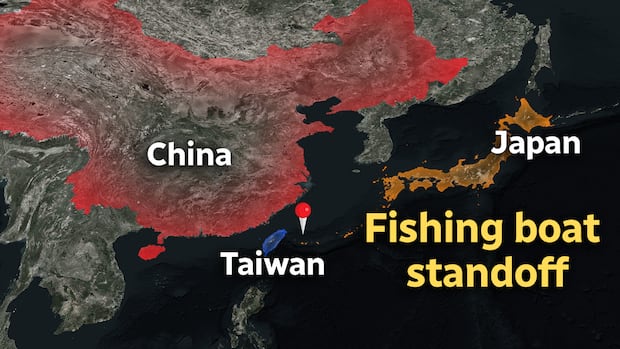
Tensions between China and Japan are rising over Japanese Prime Minister Sanae Takaichi’s recent comments on Taiwan, combined with a long-standing dispute over a chain of uninhabited islands. Andrew Chang breaks down why these tiny islands are so valuable, how Taiwan factors in and how this dispute has pushed two of Asia’s biggest powers to a tipping point.
Images provided by The Canadian Press, Reuters and Getty Images
During her campaign speeches, Takaichi passionately emphasized the necessity for proactive government spending to support “crisis management investment and growth,” which includes measures to enhance economic security, technology, and other industries. She is also advocating for stricter immigration policies, such as more rigorous requirements for foreign property ownership and limitations on the number of foreign residents.
The recent election “highlights a concerning trend in Japanese politics where political survival is prioritized over meaningful policy results,” remarked Masato Kamikubo, a politics professor at Ritsumeikan University. “Whenever the government seeks to implement necessary but unpopular reforms, the looming threat of the next election is ever-present.”
The election took place amid fresh snowfall throughout the country, including in Tokyo. Recent record snowfall in northern Japan has obstructed roads and was linked to numerous fatalities nationwide.