
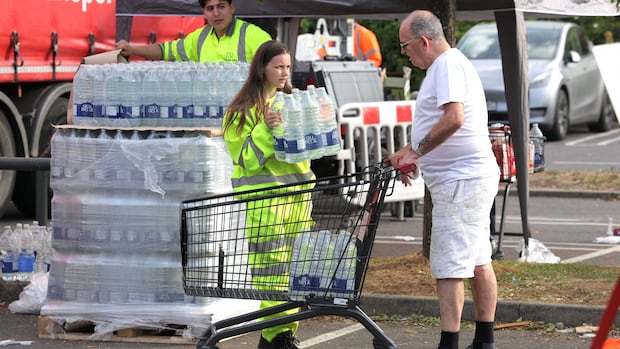
Thousands of homes in the southeastern region of England experienced water shortages or low water pressure due to an unprecedented heatwave, revealing deficiencies in the country’s aging water infrastructure. The issue impacted over 20,000 individuals at its peak, with around 8,000 residents in Whitstable facing water supply disruptions, leading to long queues for emergency water provisions.
The heatwave, affecting the U.K. and other parts of Europe, triggered a surge in water demand. Additionally, below-average rainfall in March and April strained reservoir levels, as reported by the Environment Agency. Public discontent has grown over the lack of investments by privatized water firms, resulting in regular sewage spills.
In Whitstable, numerous businesses had to shut down during a busy period coinciding with a school holiday. Cafe owner Mark Kidd expressed frustration, highlighting the importance of water supply for food preparation, while a local resident named George criticized South East Water for the outages and linked them to insufficient investment rather than climatic factors.
South East Water issued an apology for the water shortages, attributing them to exceptionally high temperatures increasing water consumption. Despite preparations for the hot weather, the company cited “low storage” levels. Pumping 628 million liters on Wednesday, significantly above the seasonal average, was necessary due to the elevated temperatures.
Both Britain and France experienced record-breaking temperatures during the recent heatwave, with meteorological services reporting temperatures exceeding 34 degrees Celsius. Experts warn that with rising global temperatures, dry periods followed by intense heatwaves are becoming more frequent, challenging water companies in managing supply and demand effectively.
Emma Hardy, the U.K.’s under-secretary for water and flooding, emphasized the need for water companies to anticipate more frequent extreme heat events. The Climate Change Committee has projected increasingly hot and dry summers for the country, estimating an annual investment requirement of approximately £11 billion to adapt to these climate changes.