
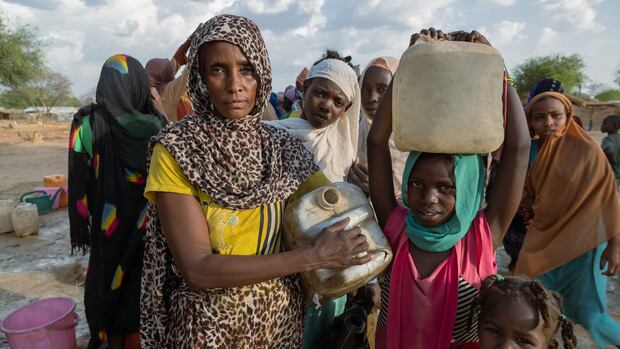
Nahma Mohammed shares her harrowing eight-day journey from Nyala, Darfur, Sudan, to Birao, Central African Republic, seeking safety under a tarpaulin tent in scorching heat. She recalls facing thieves, armed men, and constant danger along the way, describing it as a thin line between life and death. Among the many new arrivals at the Korsi Refugee camp, Nahma joins over 22,000 individuals there and the 4.4 million Sudanese displaced beyond the country’s borders.
Since the outbreak of conflict in Sudan in April 2023, the situation has escalated into what the United Nations deems the most severe displacement crisis globally, with over 11 million people uprooted from their homes. The conflict, initially sparked by a rift between Sudanese army chief Gen. Abdel Fattah al-Burhan and RSF leader Mohamed Hamdan Dagalo, has evolved into a multifaceted crisis. Currently, the Sudanese Armed Forces (SAF) control significant portions of the east and center, while RSF forces dominate the west, particularly Darfur. The targeting of crucial civilian infrastructure like hospitals and the increased use of drone warfare have intensified the peril faced by civilians.
With an estimated 33 million people requiring assistance, the humanitarian situation in Sudan is dire, exacerbated by global cuts to aid budgets. The death toll, officially put at 40,000 by the UN, is suspected to be significantly higher. The influx of refugees into Birao has strained resources, with the region facing instability due to the presence of RSF and local armed groups.
The Central African Republic, already grappling with extreme poverty, struggles to meet the needs of the influx of refugees. Stories like Hikmah Hussain’s, who fled Darfur after losing her sister to a bombing, underscore the tragic impact of the conflict on individuals. As international funding dwindles, essential services like clean water, shelter, and healthcare become scarce, exacerbating the already dire conditions faced by refugees.
Despite the challenges, community resilience shines through as refugees like Hussain take on leadership roles, filling gaps left by diminishing international support. However, critical resources like community kitchens are shutting down due to funding shortages, posing additional challenges to those affected by the conflict. As the war rages on, with ongoing aerial bombardments and drone attacks, the situation remains bleak for millions caught in the crossfire.
In the face of uncertainty, individuals like Taiba Ahmat Kamiss, a 17-year-old refugee cradling her newborn in Birao’s hospital, cling to hope for a better future. Kamiss reflects on her family’s upheaval, longing for normalcy in Sudan but resigned to an uncertain fate. As she gazes at her unnamed newborn, she echoes the sentiment shared by many in her position: “It’s only if God clears the path for us.”