
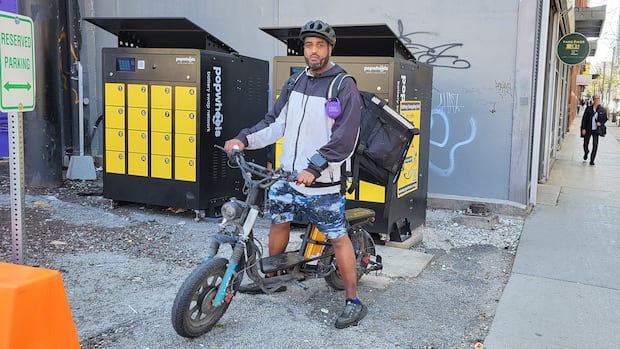
Fires and explosions caused by lithium batteries in e-bikes and e-scooters have resulted in significant damage across various Canadian cities, including Nanaimo, B.C., and Moncton, N.B. These incidents have even led to fatalities. Concerns raised by fire chiefs have prompted bans on e-bikes in certain buildings and public transport. In response to these safety issues, companies in Canada have introduced a solution aimed at addressing the needs of the growing community of e-bike users seeking affordable and convenient transportation options.
Two companies, PopWheels and PowerShelter, have recently launched fireproof charging lockers for e-bike batteries in Canada. PopWheels specifically targets food delivery workers, offering the option to swap batteries to avoid carrying extra weight. Natnael Kenaw, a food delivery worker for UberEats and DoorDash, expressed relief from back pain after using this service, which allows him to switch depleted batteries for fully charged ones at convenient locations in Toronto.
PopWheels, initially launched in New York City, has expanded to Toronto, offering monthly subscription plans for unlimited battery swaps. These smart lockers monitor battery charging and are designed to eject batteries into a fire suppressant tank if overheating is detected, ensuring safety. According to the company, there have been no thermal incidents reported so far.
On the other hand, PowerShelter, founded by Brett Bouthillier, addresses the safety concerns associated with e-bike batteries. Cheaper batteries lacking safety features, exposure to extreme conditions, and improper charging practices contribute to the risk of fires. PowerShelter provides smart charging lockers for e-bike users, emphasizing the importance of safe charging infrastructure to prevent accidents.
The concept of battery swapping and secure charging facilities not only enhances safety but also reduces costs for e-bike users. The founders of these companies aim to promote the adoption of e-bikes as a sustainable and efficient mode of transportation, emphasizing the benefits of cycling to work for health and environmental reasons. By providing proper charging infrastructure, they believe that everyone benefits from a safer and more sustainable urban transportation system.