
Ontario’s plan for a complete electric vehicle supply chain, once a key focus for Premier Doug Ford, is facing challenges as manufacturers delay or scrap projects. The government is now turning to different types of batteries to sustain the initiative.
Ford and the federal government had negotiated to attract three electric vehicle battery plants to Ontario, with investments totaling billions of dollars. The goal was to integrate these batteries into electric vehicles manufactured in the province, using parts made in Ontario and minerals sourced and refined locally.
However, several setbacks have occurred since the initial proposal. Honda postponed its plans to construct an EV battery plant and assemble electric vehicles in Alliston due to reduced demand. Umicore halted its project for a cathode plant in eastern Ontario, and General Motors ceased production of its BrightDrop electric delivery van in Ingersoll. Ford also delayed its plans to manufacture electric vehicles in Oakville, opting instead to focus on producing gas-powered pickup trucks from the F-Series line.
The auto industry in Ontario faces additional challenges following a new trade agreement between Canada and China, which will reduce tariffs on Chinese EVs in exchange for decreased tariffs on canola. While some experts suggest that cheaper Chinese EVs could boost overall demand for electric vehicles and benefit the domestic industry in the long run, uncertainties over rebates, federal EV sales mandates, and trade relations between Canada and the U.S. are dampening investor confidence in the Canadian market.
Despite these hurdles, Stellantis is adapting to the changing landscape by modifying its approach. The company, in partnership with LG, is progressing with the construction of its NextStar Energy facility in Windsor, which was initially intended for EV battery production. However, amid shifting trends, Stellantis has adjusted its focus to manufacture batteries for energy storage applications.
According to NextStar CEO Danies Lee, while the demand for electric vehicles will eventually rebound, there is currently a need for batteries for storage and other purposes, such as AI-powered devices. This strategic shift aligns with Economic Development Minister Vic Fedeli’s vision to sustain the end-to-end EV supply chain, albeit with a temporary emphasis on battery storage.
Fedeli emphasized that Ontario aims to support companies in establishing manufacturing facilities in the province, regardless of the specific product. Asahi Kasei’s separator facility in the Niagara Region is moving forward, despite being originally tied to Honda’s EV initiatives.
Looking ahead, the growing demand for electric vehicles globally indicates a future resurgence in North America. Industry experts anticipate that the need for EV manufacturing capacity will eventually materialize, although the immediate focus is on battery production and storage solutions as a viable short-term strategy.
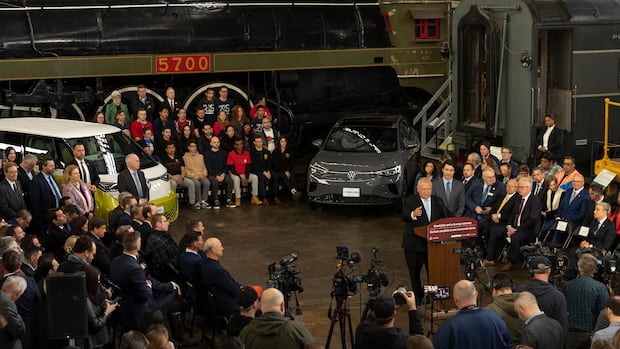
Volkswagen’s PowerCo facility in St. Thomas, which is progressing with plans to produce EV batteries, is also considering storage battery solutions. The company’s broader strategy includes developing a unified battery cell technology to cater to various applications, including automotive and energy storage.
The increasing demand for battery storage technologies presents a long-term opportunity beyond the current challenges facing the EV market. John Stackhouse from the Royal Bank of Canada highlighted the strategic importance of battery storage in meeting evolving energy needs and supporting future growth in the electric vehicle sector. Ontario’s electricity system operator anticipates a significant increase in electricity demand by 2050, driven in part by the EV industry and new AI-powered data centers.
Overall, Ontario’s shift towards battery storage technologies aligns with the evolving landscape of the electric vehicle market, offering potential benefits for both energy supply reliability and economic growth.