
The term “rules-based international order” gained popularity among Canadian leaders in 2017, representing the network of global organizations established post-World War II, supported by American influence, fostering a period of relative peace and stability for many nations. Surprisingly, from 1995 to 2016, this phrase was never uttered in the House of Commons. However, it later became a common refrain, especially after the election of Donald Trump, signifying the perceived threat to this established order.
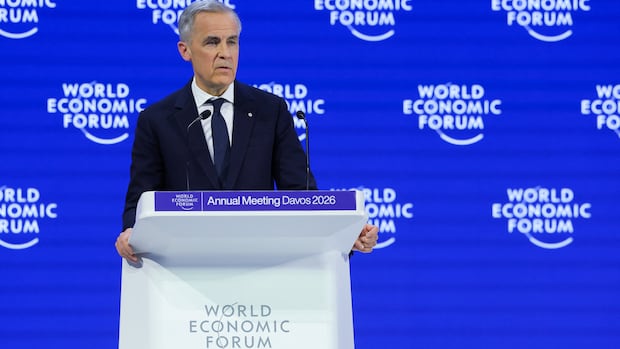
Mark Carney’s recent speech in Davos, Switzerland, urged middle powers to recognize the current state of global affairs, emphasizing the need to move beyond the idealized notion of a functioning rules-based international order. Carney highlighted the escalating power struggles among major nations, using economic ties as leverage.
Carney’s address marked a significant shift in Canadian foreign policy and global dynamics. The response to his speech, both domestically and internationally, reflects a shared yearning for candid acknowledgment amidst unfolding events. Trump’s subsequent remarks seemed to validate Carney’s concerns.
The speech’s call to action for middle powers echoes Benjamin Franklin’s historic sentiment of unity for strength. Canada’s potential leadership role in this context hinges on its willingness to engage in collective efforts, which historically depended on its level of commitment.
While Carney’s words resonate, real impact lies in aligning rhetoric with tangible actions. Following the Davos address, questions arose regarding potential shifts in Canada’s stance towards the U.S. administration and its strategic responses to evolving geopolitical challenges.
Carney’s emphasis on Canada’s role as a guiding light domestically underscores the importance of upholding national values in uncertain times. The ongoing global disruptions will test Canadian resilience and societal cohesion as the nation navigates complex issues under Carney’s leadership.