
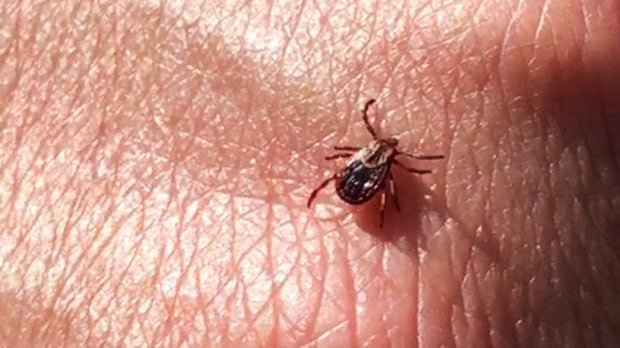
A recent study conducted by researchers at the University of Ottawa has revealed that applying woodchips to trails in forested areas can lead to a significant decrease in local tick populations. This low-tech solution could potentially lower the risk of tick bites and the transmission of Lyme disease among individuals walking in wooded areas.
The research team selected two locations within Ottawa’s Greenbelt for their study: the Mer Bleue sector in the east and the Stony Swamp sector in the west. They divided 20 trail sections, each measuring 50 meters, into two groups. One group was treated with untreated woodchips, while the other group received woodchips treated with the pesticide deltamethrin.
The findings indicated that areas with untreated woodchips experienced a 50% reduction in tick numbers, while those with pesticide-treated woodchips saw a remarkable 99% decrease in tick populations. Katarina Ost, a researcher involved in the study, highlighted the effectiveness of this approach in mitigating tick presence.
Woodchips act as a deterrent to ticks as these parasitic arachnids typically climb vegetation, such as grass, to attach themselves to hikers or pets. By covering the trail with woodchips, the growth of vegetation necessary for ticks to climb is hindered. This method is particularly suitable for wide, high-traffic trails with dense tick populations.
The use of deltamethrin-treated woodchips was found to have a more pronounced impact, with Ost emphasizing that the pesticide is safe for pets as it remains stationary once applied. To prevent tick bites in residential settings, the federal government suggests creating a barrier of wood chips, mulch, or gravel around lawns to create an environment unsuitable for ticks.
Dr. Christopher Labos, a cardiologist and epidemiologist at McGill University, emphasized the importance of controlling tick populations to prevent the spread of tick-borne diseases. While reducing tick numbers is a positive step, further research is needed to establish a direct link between tick reduction and a decrease in Lyme disease cases.
Labos pointed out that individuals must remain on designated paths for woodchips to be effective in repelling ticks. Adherence to standard precautions, such as wearing long pants, using insect repellent, and conducting tick checks, is crucial for those venturing off-trail. Additional studies could confirm the correlation between reduced tick populations and a decline in Lyme disease cases, providing valuable insights for future preventive measures.