
Budapest has issued a threat to impede the approval of new European Union sanctions against Russia and delay assistance to Ukraine until Russian oil deliveries to Hungary resume. The EU’s foreign ministers are scheduled to convene in Brussels on Monday to deliberate on the bloc’s 20th round of sanctions against Moscow, aimed at coinciding with the fourth anniversary of Russia’s invasion of Ukraine on Tuesday.
Hungarian Foreign Affairs Minister Péter Szijjártó, in a video shared on social media, declared his intent to block the sanctions package, alleging that Ukraine deliberately obstructed Russian oil deliveries through the Druzhba pipeline. Szijjártó emphasized that Hungary would withhold consent for the adoption of the 20th sanctions package until Ukraine resumes oil shipments to Hungary, thereby halting crucial decisions affecting Ukraine.
The interruption of Russian oil supplies to Hungary and Slovakia since Jan. 27, following alleged Russian drone attacks damaging the Druzhba pipeline, has strained relations between Budapest and Kyiv. The pipeline serves as a conduit for Russian crude oil through Ukrainian territory into Central Europe.
For the sanctions to be ratified, unanimous agreement among the 27 EU member states is required. Most European countries have significantly curtailed or completely halted Russian energy imports since the start of Moscow’s war in Ukraine on Feb. 24, 2022. However, Hungary and Slovakia, both EU and NATO members, have continued and even increased their receipt of Russian oil and gas, securing a temporary exemption from an EU ban on Russian oil imports.
Szijjártó also announced Hungary’s opposition to a substantial 90-billion-euro ($106-billion US) EU loan intended to support Ukraine in meeting its military and economic requirements over the next two years.
Earlier in the week, Hungary and Slovakia announced the cessation of diesel shipments to Ukraine due to oil delivery disruptions. Slovakian Prime Minister Robert Fico further threatened to terminate emergency electricity supplies to Ukraine unless oil deliveries were restored by Monday.
Ukraine’s Foreign Affairs Ministry condemned what it termed “ultimatums and blackmail” by Hungary and Slovakia, accusing the two nations of aligning with the aggressor. The ministry highlighted the provocative and destabilizing nature of such actions in light of Russian assaults on Ukraine’s energy infrastructure and attempts to deprive Ukrainians of essential services amidst severe winter conditions.
Hungary’s Prime Minister Viktor Orbán, known for his close ties to the Kremlin, has consistently argued for the necessity of Russian fossil fuels for his country’s economy. Orbán has opposed EU sanctions against Russia, claiming they would lead to economic collapse. He has also obstructed EU initiatives to aid Ukraine financially and militarily.
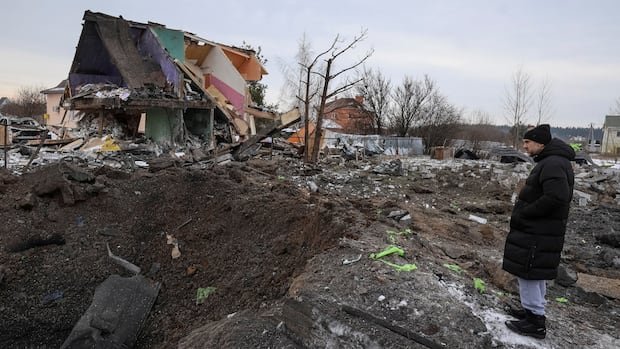
In a separate incident, Russia launched a missile and drone attack on Ukraine, resulting in one fatality in the Kyiv region and the rescue of eight individuals, including a child, from collapsed buildings. The assault caused damage and fires in multiple districts surrounding Kyiv. In Ukraine’s Odesa region, Russian strikes on energy infrastructure ignited significant fires that were subsequently extinguished.
Throughout the ongoing conflict initiated by Russia’s invasion of Ukraine, and despite international peace efforts, Ukrainian civilians have endured continuous aerial assaults. Russian attacks have targeted Ukraine’s energy grid, leaving civilians without vital services during extreme weather conditions.
Ukraine’s air force reported that Russia’s recent offensive involved 297 drones and 50 missiles, with a significant number neutralized or intercepted. Russian air defences simultaneously engaged Ukrainian drones, destroying 86 of them. An explosion in Lviv resulted in one fatality and numerous injuries, unrelated to the aerial attacks.
The escalating tensions between Hungary, Slovakia, and Ukraine underscore the complex geopolitical dynamics at play in the region, with ramifications for both European unity and the ongoing conflict in Ukraine.