
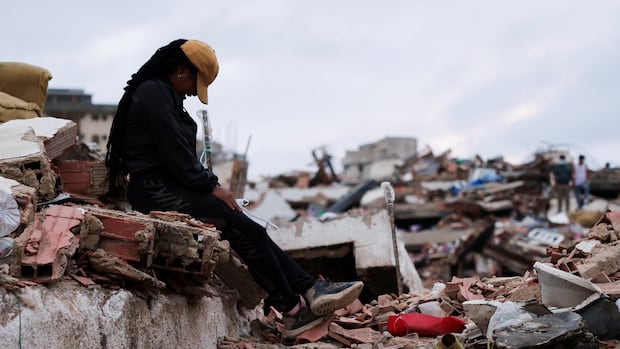
Venezuela’s recent series of earthquakes has resulted in a death toll of 3,535, as confirmed by authorities on Monday. Over 18,000 individuals are currently displaced following the disaster that hit the capital and nearby coastal regions over a week ago. Top official Jorge Rodriguez disclosed that the latest count shows 16,740 people have sustained injuries, with 17,854 individuals lacking proper shelter after the powerful quakes of magnitudes 7.2 and 7.5 struck in rapid succession.
The updated figures highlight the extensive impact of the calamity in and around Caracas and La Guaira, the coastal region most severely affected, leading to mounting criticism regarding the government’s handling of the crisis. A statement from Venezuela’s social vice-presidency indicated that approximately 12,800 individuals are being accommodated in 80 temporary shelters across Caracas and La Guaira.
Dr. Mauricio Cerpa Calderon, an advisor at the Emergency Operations Center of the Pan American Health Organization in Washington, emphasized the escalating health risks within these makeshift facilities. He outlined concerns such as overcrowding, poor ventilation, limited access to clean water, sanitation issues, and inadequate food and waste management.
Immediate health priorities include addressing respiratory infections, diarrheal diseases, skin ailments, wound infections, dengue fever, and preventable diseases like tetanus, measles, rubella, diphtheria, pertussis, and polio, as highlighted by Cerpa. Acting president Delcy Rodriguez has defended the government’s response efforts, despite growing dissatisfaction among Venezuelans who perceive the intervention as belated and insufficient. Criticism has also been voiced by global humanitarian organizations, including the International Rescue Committee.
To enhance emergency response capabilities, Rodriguez announced the deployment of security forces immediately after the earthquakes and the establishment of a new military unit dedicated to handling future crises. U.S. chargé d’affaires in Caracas, John Barrett, commended Venezuela’s cooperation with U.S. humanitarian requests, emphasizing a commitment to leading initiatives that mobilize international response teams to aid affected communities.
In La Guaira, witnesses observed trucks and forensic teams transporting coffins, with authorities conducting burials in marked areas. Photos revealed graves bearing names or numbers, as reported by Spanish newspaper El Pais. To manage the influx of deceased individuals, PAHO and the World Health Organization have provided technical guidance, body bags, three refrigerated containers for corpse storage in La Guaira’s port, and two crematoriums at alternate sites.
The United Nations continues to escalate aid operations in collaboration with Caracas authorities, with ongoing search and rescue missions and specialized medical and engineering teams arriving to assist. National health authorities are assessing targeted vaccination campaigns in temporary shelters based on risk assessments, vaccine availability, and national health guidelines.