
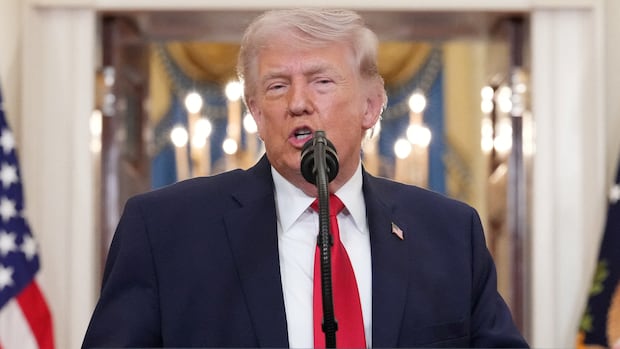
U.S. President Donald Trump addressed the nation on Wednesday evening, stating that Iran has suffered significant losses and that the toughest part of the conflict is over. He assured the American people that his main strategic goals are close to achievement, signaling that the war will conclude soon. Despite asserting that Iran is no longer a significant threat, Trump did not provide a specific timeline for the conflict’s resolution.
In his televised speech, Trump emphasized that the U.S. has effectively dismantled Iran’s navy and air force, as well as severely impeding its ballistic missile and nuclear programs. He disclosed plans to continue targeting sites within Iran over the next two to three weeks with the aim of swiftly completing the mission.
Addressing concerns over escalating gas prices due to the conflict, Trump vowed that once the war concludes, the Strait of Hormuz will naturally reopen, leading to a rapid decline in fuel costs. He attributed the recent surge in gas prices to Iran’s aggressive actions against neighboring oil tankers, which he claimed were unrelated to the ongoing conflict.
Earlier reports suggesting Iran had proposed a ceasefire were refuted by Iranian officials. Iran’s Foreign Ministry spokesperson, Esmail Baghaei, dismissed Trump’s assertion as “false and unfounded.” Iranian Foreign Minister Abbas Araghchi, in an interview with Al Jazeera, emphasized Iran’s commitment to self-defense without succumbing to threats or ultimatums.
The conflict has resulted in significant casualties across the Middle East since late February, following initial strikes by the U.S. and Israel on Iran. This led to retaliatory attacks by Iran on multiple fronts, including Israel, U.S. bases, and Gulf states, while also escalating tensions in Lebanon. The U.S. is deploying additional troops to the region, although Trump did not elaborate on their specific mission during his address.
Furthermore, Trump hinted at the possibility of targeting Iran’s Kharg Island oil export hub and potentially securing Iran’s uranium reserves through military intervention, a hazardous operation with complex risks, as highlighted by experts and former government officials.