
U.S. President Donald Trump announced on Sunday that there will be no further supply of Venezuelan oil or financial aid to Cuba. He suggested that Cuba should engage in negotiations with the United States, intensifying pressure on the historical U.S. adversary.
Venezuela has historically been a major oil provider to Cuba. However, there have been no shipments from Venezuelan ports to Cuba since the capture of Venezuelan President Nicolás Maduro by U.S. forces on January 3. This event occurred amidst a strict U.S. oil blockade on Venezuela, as indicated by shipping data.
Concurrently, Caracas and Washington are in discussions for a $2 billion deal to export up to 50 million barrels of Venezuelan oil to the U.S. The revenue from this deal would be deposited into U.S. Treasury-monitored accounts, a significant test for the evolving relationship between Trump and interim President Delcy Rodríguez.
In a post on his Truth Social platform, Trump emphasized, “THERE WILL BE NO MORE OIL OR MONEY GOING TO CUBA — ZERO! I strongly suggest they make a deal, BEFORE IT IS TOO LATE.” He highlighted Cuba’s historical reliance on Venezuela for oil and financial support.
Although Trump did not provide details on the proposed deal, U.S. officials have recently adopted a more hostile stance towards Cuba.
Cuban Foreign Affairs Minister Bruno Rodríguez defended Cuba’s import rights in a social media post, asserting that Cuba has the prerogative to import fuel from any willing suppliers. He refuted claims that Cuba received compensation for providing security services to other nations.
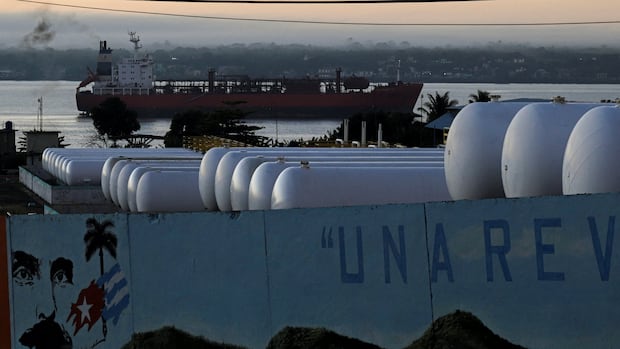
Cuba, which heavily relies on imported crude and fuel, mainly from Venezuela, faced a decline in its oil supply as Venezuela’s refining capacity diminished in recent years. Despite this, Venezuela remains Cuba’s primary oil supplier, with approximately 26,500 barrels per day exported last year.
Mexico has emerged as a crucial oil supplier to Cuba in recent weeks, although the supply volume remains limited. Mexican President Claudia Sheinbaum acknowledged that Mexico had become an important crude supplier to Cuba due to recent developments in Venezuela.
U.S. intelligence reports have expressed concerns about Cuba’s economic and political challenges. While assessments indicate strains in key sectors like agriculture and tourism due to blackouts and trade sanctions, there is no clear backing for Trump’s assertion that the island is on the verge of collapse.
The potential loss of oil imports and support from Venezuela, a longstanding ally, could pose governance challenges for President Miguel Diaz-Canel in the future.