
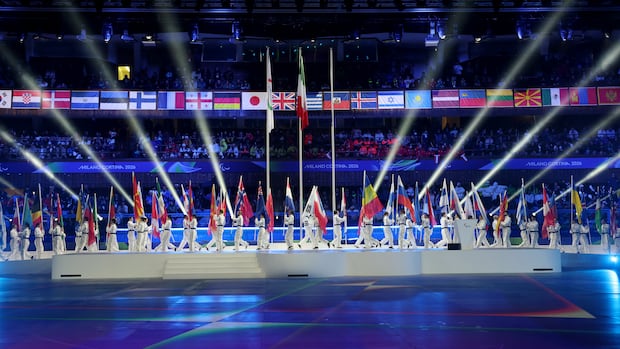
The Milano-Cortina Winter Paralympics concluded with a closing ceremony that saw a boycott by Ukraine. The United States Para ice hockey team clinched the final gold medal of the Games. The return of the Russian flag and national anthem added a significant moment to the event.
China emerged as the dominant force, leading the medals table with 15 golds, surpassing the United States by two. The Games commemorated the 50th anniversary of the Winter Paralympics.
The Russian national anthem resounded eight times at the event after Russian athletes competed under their flag for the first time since the 2014 Sochi Winter Games. Ukraine protested against the participation of Russian athletes, leading to a boycott of the opening and closing ceremonies.
The Winter Paralympics took place in Italy two decades after being held in Turin. It marked the 14th edition of the Winter Paralympics since its inception in 1976.
The return of the Russian flag and anthem could signal a potential reintegration into the Olympic community ahead of the 2028 Summer Games in Los Angeles.
China continued its reign, topping the medals table with 44 medals, while Russia secured eight gold medals. Italy and Austria also showcased strong performances in various Paralympic events.
Canada shone at the Games, with Para nordic skiing star Natalie Wilkie leading the way with four medals. The Canadian wheelchair curling team made history by winning their fourth Paralympic title.
The Milano Cortina Games set records with 611 Para athletes from 55 nations participating, making it the largest Winter Paralympics to date. The event witnessed increased female participation, with 160 female athletes competing.
Despite challenges such as the theft of curling stones, warm weather, and scheduling adjustments, the Games were well-received. The next Winter Paralympic Games are set to take place in the French Alps in 2030, with discussions underway to potentially expand the sports lineup and include more disability groups.