
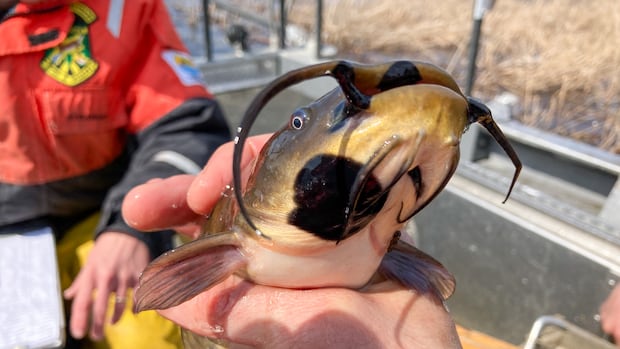
A recent genetic study has revealed the existence of a unique case where cancerous tumors are spreading among catfish in Quebec and the northeastern U.S. This discovery marks the first known instance of transmissible cancer in fish and is among the rare cases of transmissible cancers ever documented.
Julie Dragon, one of the study’s lead researchers, highlighted the rarity of such occurrences in nature, noting that only three other transmissible cancers have been identified in Tasmanian devils, dogs, and shellfish.
The phenomenon was first observed in brown bullhead catfish in Lake Memphremagog, where anglers reported catching fish with unusual black spots and lumps resembling melanoma skin cancer tumors. Subsequent investigations revealed that approximately one-third of the brown bullheads in the lake are affected by these tumors.
While the extent of the fish’s illness varies, with some experiencing metastases to other organs, many infected fish appear to be relatively healthy, indicating they can live with the disease for some time. Concerns arose among locals following a sudden increase in black lesions after a major flood caused by post-tropical storm Irene.
Despite inconclusive tests for carcinogens, a study found elevated levels of certain metals, including arsenic, in the skin of fish with tumors. Subsequent genetic testing ruled out inbreeding as a cause but revealed a surprising finding: the cancer cells were more similar to each other than to the host fish’s cells.
Researchers speculate that the tumors may be transmitted during spawning, as adult fish cluster together and could potentially transfer cells through physical contact. While direct transmission between fish has not been proven, ongoing research aims to address this.
The study, funded by U.S. and Vermont government agencies, recommends caution when consuming fish with tumors, although there is no evidence of harm to human health. Catfish with similar tumors have also been found in other lakes, prompting monitoring efforts by environmental authorities.