
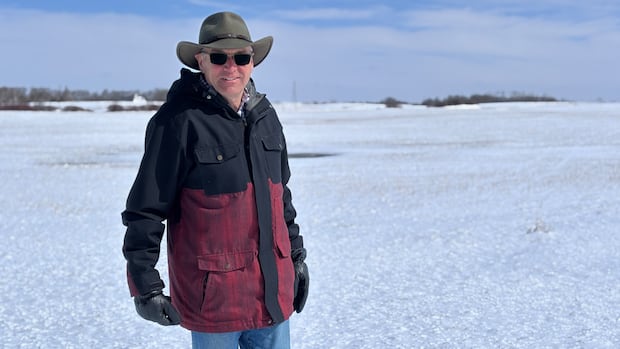
In the vicinity of Bladworth, Sask., Ian McCreary is preparing for the upcoming spring planting season and making arrangements for fertilization on his snow-covered fields. Concerns about the environmental impact of the fertilizer seeping into the soil are at the forefront of his mind.
According to McCreary, nitrogen fertilizer is crucial for farming operations but also poses potential risks that must be carefully controlled. While the agriculture sector has long been aware of the need to address fertilizer runoff, a recent study focusing on urea fertilizer has heightened awareness of the issue.
Researchers from the University of Regina and the University of Saskatchewan conducted tests on urea fertilizer, a product that plays a key role in feeding a significant portion of the global population. Their findings revealed that the fertilizer, when introduced into farm ponds, led to a decline in water quality and emerged as a significant threat to freshwater ecosystems.
The application of urea fertilizer resulted in the rapid proliferation of algae in the ponds, depleting oxygen levels and causing the water to turn green and murky. This degradation had devastating consequences on the ecosystem, leading to the death of aquatic life.
The study indicated that nearly half of the lakes, wetlands, and reservoirs in the Prairies could face degradation due to widespread use of urea. Additionally, agricultural regions in the U.S. and China were identified as being susceptible to similar risks.
Peter Leavitt, a biology professor at the University of Regina and co-author of the study, emphasized the urgency of addressing nitrogen fertilizer runoff, stressing the importance of preventing its entry into water sources.
To address these concerns, researchers advocate for continued use of urea for agricultural purposes but stress the need for improved management practices to prevent its contamination of water bodies. Cale Gushulak, a biology professor at the University of Manitoba, highlighted the necessity of balancing food production with water conservation to safeguard human health.
Preservation of wetlands and the implementation of measures to prevent fertilizer runoff into waterways were recommended as effective strategies to mitigate the environmental impact. Farmers were encouraged to work around wetlands and maintain natural buffers of vegetation to prevent fertilizer leaching.
Ian McCreary, a member of Farmers for Climate Solutions, emphasized the urgency of the situation and shared his proactive approach in reducing fertilizer usage on his farm. By strategically mapping his fields to identify areas with nutrient-rich soil, McCreary aims to minimize the need for urea application.
McCreary stressed the importance of treating fertilizer as a hazardous substance to guide decision-making and mitigate environmental risks associated with its use.