
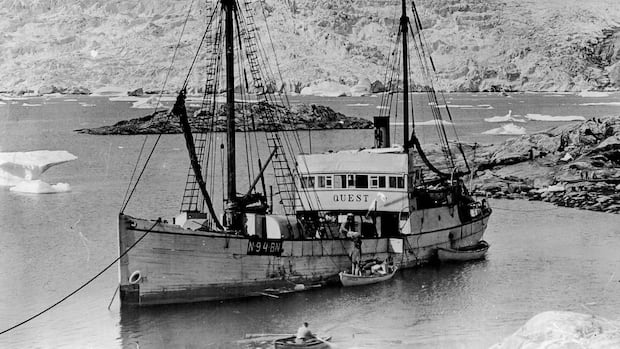
An upcoming expedition funded by the Royal Canadian Geographical Society (RCGS) aims to extensively document the wreck of the Quest, which has rested undisturbed 400 meters below the Labrador Sea since its sinking in 1962. The project will utilize cutting-edge Canadian underwater imaging technology developed by Voyis, a company based in Waterloo, Ontario, to create a high-resolution digital twin of the ship. Following the exploration of Quest, the researchers will survey Terra Nova, the vessel that transported British explorer Robert Falcon Scott to Antarctica.
CBC News has exclusive access to cover the expedition aboard the research vessel Atlantis as it embarks on a 21-day journey from the Woods Hole Oceanographic Institute in Massachusetts starting July 2. This venture reflects a modern approach to underwater archaeology, emphasizing the digital documentation of fragile shipwrecks over physical recovery efforts.
David Mearns, a seasoned shipwreck hunter and co-chief scientist of the expedition, views this opportunity to document both Quest and Terra Nova as a rare event, describing it as a “once-in-a-generation” endeavor. Notably, Quest carried the renowned Antarctic explorer Sir Ernest Shackleton, who tragically passed away aboard the ship in 1922 near South Georgia.
The Quest currently lies near Labrador’s south coast in approximately 400 meters of water, while Terra Nova rests about 30 kilometers south of the Greenland mainland in around 170 meters of water. The expedition, which forms part of an evolving trend in underwater exploration, aims to uncover insights into the preserved state of the wrecks and the surrounding debris fields.
Utilizing a combination of lasers, stereo cameras, and advanced software, the researchers will construct detailed three-dimensional models of the ships and their environs through a process called photogrammetry. This innovative approach ensures precise data collection and analysis, enabling remote experts to engage with the findings long after the expedition concludes.
Voyis, a company specializing in underwater imagery that has previously worked on projects such as the Titanic and Endurance shipwrecks, will play a crucial role in this expedition. By leveraging their expertise and technology, the team aims to reconstruct the ships in digital form, providing valuable insights into maritime history and exploration.
While the expedition holds promise for groundbreaking discoveries, challenges such as strong currents and poor visibility at depth could pose obstacles to the success of the mission. The intricate operation of remotely operated vehicles in challenging underwater conditions underscores the complexity and uncertainty inherent in exploring historic shipwrecks like Quest and Terra Nova.