
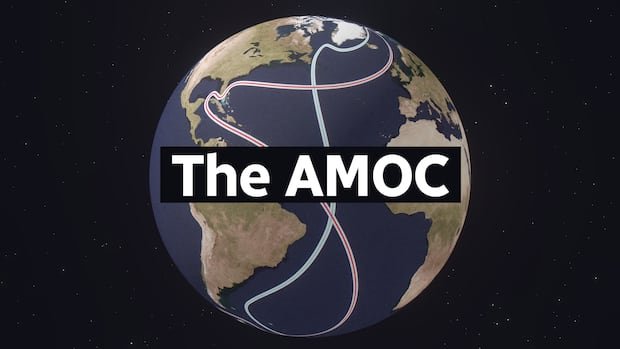
The film “The Day After Tomorrow” depicted a catastrophic scenario of the planet entering another ice age due to climate impacts. While the movie was fictional, its premise was rooted in scientific understanding, particularly the role of the Atlantic Meridional Overturning Circulation (AMOC). Scientists are now increasingly alarmed by the potential consequences of an AMOC slowdown and its global implications.
The AMOC is a crucial part of the world’s ocean currents system, acting as a global conveyor belt that transports warm surface water into the North Atlantic. This water then sinks into the deep ocean, circulates southward, and eventually resurfaces, playing a vital role in regulating global weather patterns and supporting marine ecosystems.
Recent research, including a study by the University of Miami, has shown that the AMOC has already slowed by 10 to 20 percent over the past two decades. Climate models have long predicted this slowdown, attributing it to the impact of global warming on ocean temperatures and density.
According to Professor Stefan Rahmstorf from the Potsdam Institute for Climate Impact Research, the AMOC system could potentially slow by 51% by 2100 under a mid-range greenhouse gas emissions scenario. This slowdown could have far-reaching effects on agriculture, food production, climate, weather patterns, ecosystems, and sea levels.
The study also suggests that the weakening of the AMOC could intensify winter storms, such as Nor’easters, and lead to warmer waters off the coast of Nova Scotia, affecting marine life and oxygen levels. This would have significant implications for Atlantic Canada, emphasizing the need for more research and data collection to prepare for these potential changes.
Both Douglas Wallace, a professor of Oceanography at Dalhousie University, and Rahmstorf emphasize the importance of taking action to reduce the risks associated with AMOC slowdown. They advocate for adherence to the Paris climate agreement and a swift transition away from fossil fuels to mitigate the impacts of climate change.
In conclusion, the threat of an AMOC shutdown poses significant challenges for Atlantic Canada, necessitating proactive measures to address its potential consequences on the region’s environment and economy.