
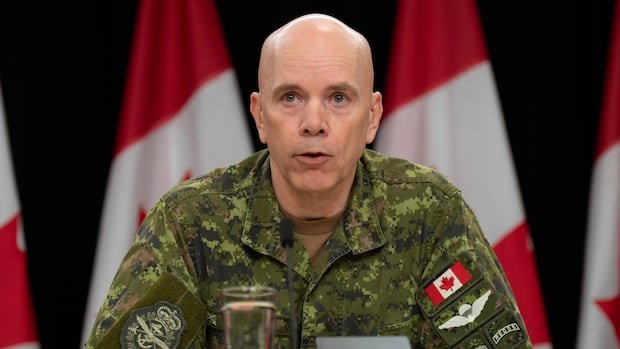
In the midst of U.S. President Donald Trump’s push to acquire Greenland for national security reasons, a former top Canadian military official is cautioning that a potential U.S. takeover of the region could lead to the disintegration of the North Atlantic Treaty Organization (NATO).
Retired general Wayne Eyre, who previously served as Canada’s chief of the defence staff, expressed concerns about the unprecedented scenario of one NATO ally seizing territory from another. Eyre echoed the Danish perspective that such an event could fracture NATO, playing into the hands of Russian President Vladimir Putin.
Following Trump’s interest in Greenland, U.S. officials have escalated their discourse on the acquisition, even hinting at military intervention as an option. Danish Prime Minister Mette Frederiksen warned that if the U.S. were to attack another NATO member, it could jeopardize the alliance and the security architecture established post-World War II.
Eyre emphasized the need for Canada to prepare for various potential outcomes and emphasized the importance of maintaining strength and resilience in the face of uncertainty. He highlighted the significance of bolstering alliances, the economy, democratic institutions, and defenses against foreign interference.
Addressing the evolving geopolitical landscape, Jody Thomas, a former national security adviser to Canadian Prime Minister Justin Trudeau, drew parallels between Canada and Greenland in terms of resources and Arctic access, emphasizing the need to safeguard Canadian sovereignty in the face of emerging threats.
Amid Trump’s reshuffling of military leadership and concerns about political-military relations, Eyre expressed apprehension for military leaders facing unprecedented challenges. He underscored the duty of the military to uphold lawful orders but acknowledged the complexities when the legality of orders is in question.
As the dynamics of intelligence sharing and trust evolve, Thomas advocated for Canada to consider establishing a foreign human intelligence service to enhance independence and credibility in intelligence operations. Emphasizing the importance of self-reliance in intelligence gathering, she suggested that Canada’s existing intelligence agency collaborates with foreign partners to access critical information.
In navigating the shifting global security landscape, Eyre emphasized the importance of confidence, resilience, and a proactive approach to address challenges effectively, acknowledging Canada’s strengths and potential in safeguarding its interests.
Overall, as geopolitical tensions evolve and threats diversify, both Eyre and Thomas underscored the imperative for Canada to fortify its strategic position and capabilities to navigate an increasingly complex international environment.