
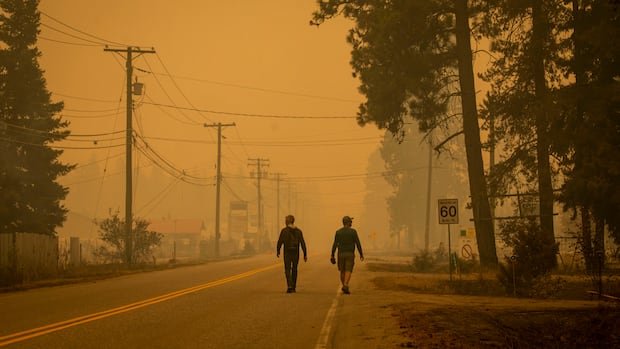
Health experts and advocates are expressing worries about deficiencies in air quality monitoring in rural areas of British Columbia, highlighting the potential risk of exposure to hazardous wildfire smoke levels in communities lacking accurate local data access. This concern arises amidst a growing understanding of the health effects of wildfire smoke and the installation of new monitoring stations in various regions of the province to bridge existing gaps.
Air quality monitoring is primarily overseen by federal and provincial authorities, with the National Air Pollution Surveillance program comprising 286 sites distributed across all provinces and territories, as per Environment Canada. Christopher Lam, the B.C. Lung Foundation’s president and CEO, emphasized the substantial geographic gaps in monitoring coverage, particularly impacting rural and remote areas where local pollution levels and associated health hazards often go unnoticed.
The changing climate, characterized by longer fire seasons and arid landscapes, has led to more frequent and severe forest fires, according to scientists. Families in remote communities are already adapting their routines to cope with wildfire smoke, such as nine-year-old Roland Latimer in Gold River, who checks air quality daily due to his asthma condition, which necessitates staying indoors on poor air quality days.
Access to precise and local air quality information is crucial for families like Roland’s, as highlighted by his mother, Tricia Latimer, who noted the previous lack of accurate monitoring in their area. The installation of air quality monitors by the B.C. Lung Foundation in Gold River has provided residents with more reliable data, improving their ability to make informed decisions regarding outdoor activities and health protection measures.
The tragic death of Carter Vigh, a nine-year-old from 100 Mile House who succumbed to an asthma attack during the severe 2023 wildfire season, underscores the importance of reliable air quality monitoring. Carter’s parents, Amber and her family, have since been instrumental in advocating for enhanced monitoring systems across the province, leading to initiatives like Carter’s Project, which has deployed outdoor air quality monitors in various locations, including Gold River.
The detrimental health impacts of wildfire smoke extend beyond immediate fatalities, with an estimated 5,400 acute deaths and 82,100 premature deaths globally attributed to the record-breaking Canadian wildfires in 2023. Sarah Henderson, the scientific director at the B.C. Centre for Disease Control, emphasized that these deaths are just the tip of the iceberg in terms of health consequences, with smoke particles like PM2.5 posing severe respiratory and systemic health risks.
Ongoing research, such as that conducted by Chris Carlsten at the University of British Columbia’s Air Pollution Exposure Laboratory, aims to shed light on the comprehensive health implications of poor air quality. Carlsten’s work indicates that wildfire smoke may be particularly harmful compared to other pollutants, affecting not only respiratory health but also potentially impacting cardiovascular and neurological functions.
Health officials advise the public to take precautions during smoky periods, including limiting outdoor activities and enhancing indoor air quality to mitigate health risks. With most individuals spending the majority of their time indoors, ensuring clean indoor air is crucial for safeguarding overall health and well-being, as emphasized by experts like Henderson.