
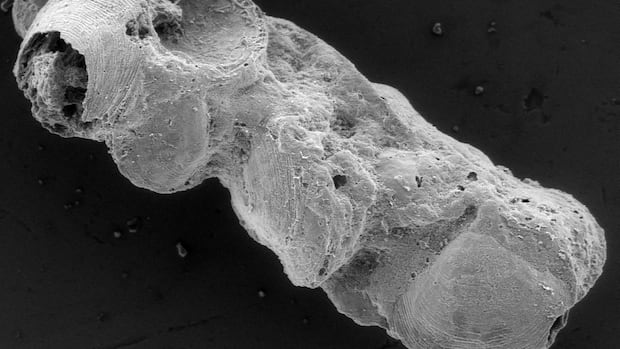
Long before the existence of dinosaurs, there was a notable increase in biodiversity leading to the emergence of early animal ancestors and a rise in fecal matter. A recent study shed light on the significance of examining coprolites, or fossilized feces, in understanding the ecosystems of Earth’s past and present, including nutrient cycles and animal interactions.
Published in the journal Trends in Evolution & Ecology, the study delved into the analysis of fecal fossils dating back to the Cambrian period, around 540 million years ago. By studying feces from ancient worms, invertebrates, and mollusk-like creatures, researchers discovered that fecal matter played a crucial role in enhancing deep-water ecosystems and making nutrients more accessible during that era, long before the time of dinosaurs.
The abundance of feces during the Cambrian period, as revealed in the study, holds significance for unraveling the origins of modern ocean ecosystems. According to Julien Kimmig, a co-author and head of the paleontology division at the Karlsruhe Natural History Museum in Germany, understanding the role of feces in marine ecosystems is vital for comprehending the dynamics of both past and present environments and their potential impact on evolution.
The research conducted by Kimmig and Russell Bicknell involved the analysis of hundreds of coprolites from various global deposits, representing a range of creatures such as burrowing worms and arthropods. These fecal fossils, starting as microscopic traces and evolving into larger forms resembling rabbit droppings, provided valuable insights into the evolution of ecosystems and predator-prey relationships during the Cambrian period.
Exploring coprolites not only offers clues about ancient animal diets and interactions but also provides a deeper understanding of Earth’s ecological processes and the transformative effects of the Cambrian Radiation. By examining how past ecosystems adapted to environmental changes, researchers like Kimmig aim to draw parallels with modern ecosystems and anticipate future ecological shifts.
The study underscores the importance of investigating coprolites in paleontology, particularly in the context of the Cambrian period, which marked a significant diversification of animal life forms. By studying fecal records and their implications on nutrient cycles and biodiversity, researchers can gain valuable insights into the evolutionary history of marine ecosystems and their relevance to contemporary and future ecological scenarios.
Karen Chin, a paleontologist at the University of Colorado, emphasizes the value of coprolites in uncovering intricate details about ancient ecosystems and biological interactions. Despite being less glamorous than traditional fossil discoveries, coprolites offer unique perspectives on ancient food webs, carbon cycles, and species interactions, shedding light on the mysteries of the past.
Through a comprehensive study of coprolites, researchers like Kimmig and Chin aim to elevate the significance of these overlooked fossils and broaden our understanding of ancient life forms and ecosystems for future generations.