
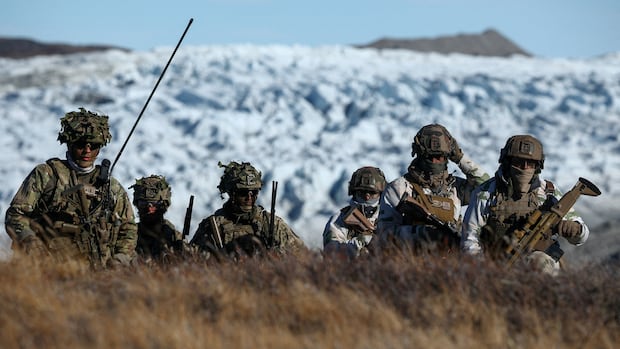
NATO Secretary General Mark Rutte displayed a cautious stance in addressing U.S. President Donald Trump’s remarks about the potential deployment of European troops in Greenland. Reports emerged that the U.K. and Germany, along with other nations, are considering a military presence on the Arctic island as a precaution against American takeover.
Trump’s assertive stance on Greenland and the use of military force against the Danish territory have brought attention to long-neglected issues by NATO and the United States. Rutte hinted at ongoing European discussions on enhancing Arctic security, emphasizing the need for collective efforts to prioritize the safety of the region.
The objective seems to be to assure Trump that NATO shares his interest in fortifying the island’s defenses. The renewed focus on Arctic security comes after years of minimal attention from the U.S. and NATO, with a notable shift in Washington’s approach since 2022, particularly during the recent Trump administration.
While Canada has increased its focus on Arctic policy and allocated additional funds for the region, the broader Western military alliance has been caught unprepared for heightened security concerns. NATO lacks an official Arctic policy and a dedicated regional command, leaving it ill-equipped to address evolving security challenges.
Recent developments, such as the transfer of Greenland’s oversight to the U.S. Northern Command, underscore Washington’s view of the island as integral to its homeland defense network. The potential independence of Greenland from Denmark and its implications for Arctic defense have also been subjects of concern among defense analysts.
Efforts to bolster Greenland’s mineral wealth and attract Western investments have faced hurdles, with China’s involvement in the island’s rare earth minerals sector raising geopolitical tensions. Greenland’s strategic significance and the complexities surrounding its governance have prompted discussions on the island’s future alignment with NATO and the potential security implications.
The evolving dynamics in the Arctic region underscore the need for a comprehensive approach to security and cooperation among NATO allies, particularly in light of changing geopolitical realities and strategic interests.