
Iran is selectively allowing certain ships to pass through the Strait of Hormuz amid the closure to most marine traffic, according to experts. Data on marine traffic reveals a significant decrease in the number of ships transiting through the vital waterway since the conflict began about a month ago due to the fear of attacks.
Iran’s actions in attacking Persian Gulf shipping and issuing threats have led to the stranding of numerous vessels and seafarers, disrupting energy exports such as crude oil from Saudi Arabia and liquefied natural gas from Qatar. Prior to the conflict, the UN estimated an average of 151 ships passing through the strait daily in February. However, this number has drastically dropped to around four or five ships per day since the onset of the war, as stated by Jonathan Schroden, the chief research officer at the U.S.-based Center for Naval Analyses.
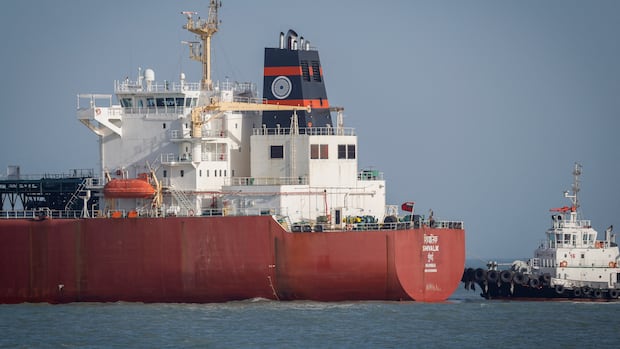
Recent marine traffic data indicates that most of the vessels navigating the strait have been Iranian oil tankers departing and bulk carriers arriving in Iran with various commodities. Despite challenges in tracking vessels due to some disabling their geo-tracking systems, it has been observed that a few ships have managed to pass through by deviating from the usual shipping lanes, including one associated with Pakistan.
Notably, nations like Pakistan, China, and India have seen the majority of their ships successfully traversing the strait, suggesting Iran’s distinction between ships linked to its adversaries and those not aligned with them. Reports from Lloyd’s List reveal that over 20 vessels have followed an approved route to pass through the strait, with some tankers making stops at Qeshm Island for clearance before continuing their journey.
Iran has made it clear that it will allow the passage of some ships while blocking those associated with the U.S., Israel, or their allies. As the conflict persists, Iran’s control over the strait is becoming more evident, prompting scrutiny from the shipping industry and governments on the strait’s vulnerability moving forward.
In response to the situation, U.S. President Donald Trump initially threatened Iran with severe consequences if it did not ease its grip on the strait. However, Trump later extended the deadline for negotiations, indicating a willingness to engage in discussions to resolve the conflict peacefully.