
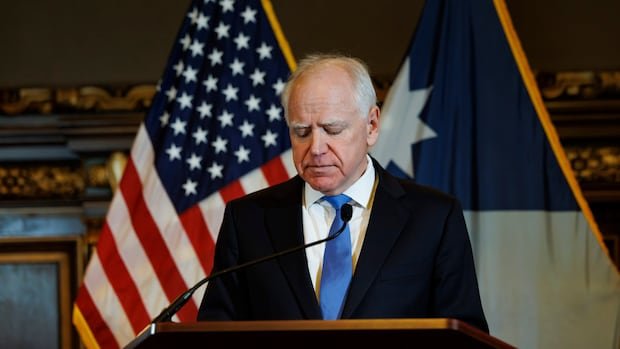
Minnesota Governor Tim Walz has decided not to seek a third term, withdrawing from his re-election race shortly after launching his campaign. Previously part of the Democratic U.S. presidential ticket alongside Kamala Harris, Walz stated on Monday that he lacked the necessary vigor to secure another term, despite his belief in his potential victory. He attributed his decision to the ongoing focus on fraud cases and labeled the past year as exceptionally challenging for the state, although he acknowledged his achievements during his initial seven years in office.
The Trump administration, along with other Republicans, has persistently highlighted a fraud investigation involving child-care programs in Minnesota through social media and right-wing cable news platforms. Last week, Trump’s administration froze child-care funds to Minnesota and demanded an audit of certain daycare centers following a series of fraud incidents in state government programs. Walz criticized this move, accusing Trump and his allies of attempting to sow discord and diminish the quality of life in Minnesota.
The strained relationship between Trump and Walz has endured beyond the 2024 campaign. Following the tragic deaths of former Democratic state House Speaker Melissa Hortman and her husband, Trump refrained from offering condolences to Walz, dismissing it as futile. Recently, Trump shared a social media post on Truth Social implicating Walz in Hortman’s death, prompting strong condemnation from both Walz and Hortman’s children.
Harris, in a social media post, praised Walz for always prioritizing the people of Minnesota, emphasizing his selfless dedication. Walz, known for flipping a Republican seat in rural Minnesota in 2006 before becoming governor, received mixed reactions during his previous election campaigns. Despite his warm reception among Democratic voters, he faced criticism for his debate performance against his opponents.
Throughout his tenure as governor, Walz navigated a divided legislature, working to pass progressive initiatives despite resistance. His administration witnessed significant advancements, including the elimination of state abortion restrictions, protection of gender-affirming care for transgender youth, and the legalization of recreational marijuana. However, challenges arose, such as the $300-million US pandemic food fraud scheme involving Feeding Our Future, predominantly affecting Somali Americans.
Minnesota’s Somali community, comprising approximately 84,000 residents in the Minneapolis-St. Paul area, faced heightened scrutiny due to the Trump administration’s immigration policies. While Walz received praise for his dedication to public service, critics, including the Republican Governors Association, accused him of ineffective leadership. As the gubernatorial race unfolds, a diverse group of Republican candidates, including MyPillow CEO Mike Lindell, are vying for the nomination in a total of 36 states holding gubernatorial elections in 2026.