
B.C. cities have raised concerns about bearing the financial burden of various costs and duties shifted onto them by higher levels of government. Several municipalities are now attempting to measure the extent of these responsibilities, revealing significant financial impacts they have had to absorb.
Cities argue that the transfer of costs puts pressure on local budgets, making it challenging to fund essential services such as infrastructure, public spaces, and recreational facilities as they assume greater roles in managing complex issues traditionally overseen by provincial and federal authorities.
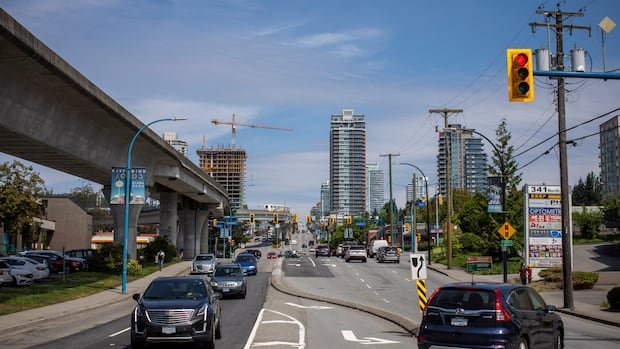
For instance, Coquitlam, a Vancouver suburb with around 150,000 residents, estimated that provincial government downloading had cost the city $37.6 million between 2021 and 2024. This figure is equivalent to an 18% cumulative tax hike over the same period.
The city highlighted various expenses resulting from the downloading, including increased spending on law enforcement and emergency services due to insufficient support in areas like housing and mental health, reduced provincial funding for libraries, and growing responsibilities in climate resilience efforts. Examples cited included investments in affordable housing projects and costs related to responding to incidents at provincially-run mental health and addiction facilities.
Similar to Coquitlam, Kamloops in the B.C. Interior identified $13.1 million in downloaded costs in 2024, with an additional projected impact of $122 million for maintenance of infrastructure like orphan dikes and inherited dams. The city pointed to expenses on shelters, support housing, and emergency services for social challenges, including the drug crisis, along with increased costs due to legislative changes.
In a separate analysis, Vancouver calculated $353.1 million in downloaded costs in 2022, offset by $44 million in revenues from higher governments. Meanwhile, Penticton tallied $4.6 million in provincial downloading specifically for public safety between 2019 and 2023.
While some municipalities are pushing back against the financial strain, the Ministry of Municipal Affairs in B.C. emphasized its support for local governments through programs like the $1 billion one-time infrastructure grant and funding for housing legislation and climate action initiatives.
At the federal level, a plan to invest $51 billion over the next decade in local infrastructure projects, with ongoing annual funding of $3 billion, was announced. The Federation of Canadian Municipalities has called for revenue reform to help cities better manage their financial obligations, advocating for changes in how municipalities generate funds and receive federal transfers.
The federation’s president, Rebecca Bligh, noted the critical role municipalities play in providing frontline services and infrastructure, highlighting the need for updated revenue tools to reflect the current challenges faced by cities in addressing housing, healthcare, and social issues. Municipalities are hopeful that the federal government will consider their recommendations as it finalizes its funding program design.