
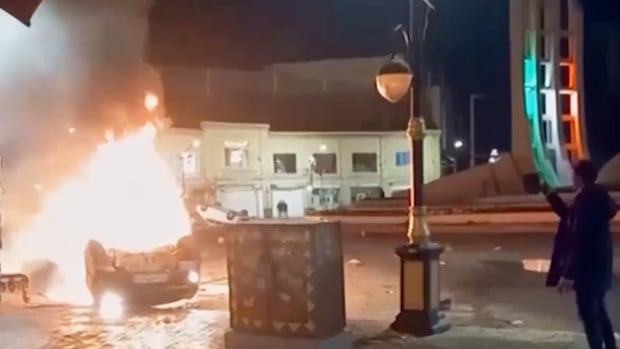
Nationwide demonstrations in Iran challenging the ruling theocracy have entered their second week, with activists reporting at least 116 fatalities linked to the unrest. The ongoing protests have led to the detainment of over 2,600 individuals, as confirmed by the U.S.-based Human Rights Activists News Agency.
As communication channels within Iran remain disrupted, monitoring the situation externally has become increasingly challenging. Iranian state TV has focused on security force casualties while downplaying the deaths of protesters, labeling them as “terrorists.” Supreme Leader Ayatollah Ali Khamenei has hinted at a forthcoming crackdown, disregarding warnings from the U.S.
Tehran has intensified its warnings by declaring participation in protests as an offense punishable by death. The Iranian attorney general issued a stern statement, threatening severe consequences for anyone aiding the demonstrators.
International reactions have varied, with U.S. President Donald Trump expressing solidarity with the protesters and offering assistance. Meanwhile, Iran’s parliament speaker cautioned that the U.S. military and Israel could become “legitimate targets” if America takes action against Iran.
Canada, along with Australia and the European Union, has denounced the violence in Iran and praised the courage of the Iranian people standing up for their rights.
Conflicting reports emerged over the weekend, with Iranian authorities portraying a semblance of control, while videos surfaced showing continued protests in various cities. Amid the turmoil, concerns are mounting that the internet blackout in Iran could result in a violent crackdown by security forces, evoking memories of past brutal responses to dissent.
As the protests persist, the international community closely watches the evolving situation in Iran, with tensions escalating and the future uncertain for both the government and the protesters.