
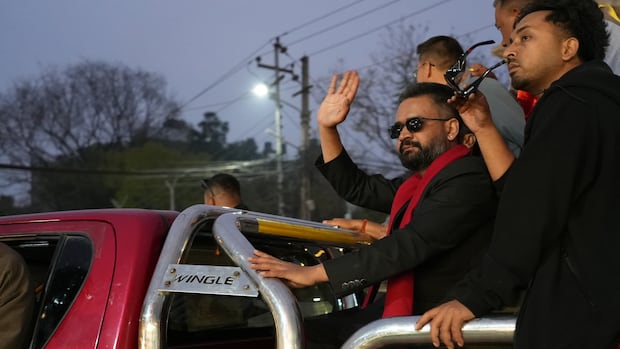
In a significant triumph set to reshape Nepal’s political landscape, former rapper now turned politician Balendra Shah is on track for a landslide victory in the nation’s first elections following last year’s youth-driven protests that ousted the previous government. Initial results from Nepal’s election commission on Sunday indicated that 35-year-old ex-rapper Shah, popularly known as Balen, and his moderate Rastriya Swatantra Party (RSP) secured 122 out of 165 directly elected parliamentary seats.
The electorate across Nepal overwhelmingly supported Balen, signaling a clear mandate for Gen Z’s discontent with the establishment, which is perceived as fostering government corruption and favoritism. Voters like 24-year-old Shubha Khadgi from Kathmandu expressed a desire for Balen to spearhead a new wave of change centered on youth empowerment, fresh ideas, and systemic reforms.
The recent election marked Nepal’s first since a series of protests erupted last September, triggered by security forces opening fire on demonstrators rallying against a social media ban. The violent crackdown led to the deaths of 19 protesters and fueled widespread anger against the entrenched ruling class and the nation’s economic decline. The subsequent Gen Z uprising saw over 70 casualties and widespread destruction of public buildings.
Celebrations erupted in Nepal’s Jhapa-5 constituency as supporters of Balen’s RSP party rejoiced at his resounding victory over former Prime Minister KP Sharma Oli. Balen, known for his critical rap lyrics targeting the political elite, secured a convincing win with a margin of nearly 50,000 votes over Oli.
While Balen’s victory appears imminent, official results are pending as Nepal also allocates parliamentary seats proportionally to parties, a process that takes longer to finalize. The outcome of these proportional seats will impact the overall composition of the parliament and the governing dynamics.
The election outcome has been met with enthusiasm by many, including observers like constitutional expert Bipin Adhikari, who highlighted the RSP’s rapid rise and lack of political baggage. The party, which Balen joined only in January, has quickly gained traction among voters seeking a departure from traditional politics.
For individuals like Madan Karki, a protester injured during last year’s unrest, the election result signifies a positive shift. Despite initial skepticism about the potential for meaningful change in Nepal’s political landscape, Karki now harbors hope for substantial reforms under the new leadership.
As Nepal braces for a new era under Balen’s leadership, challenges lie ahead, including the need for consensus-building in the National Assembly and addressing concerns about the leader’s communication style and foreign policy stance. However, supporters like Khadgi emphasize the importance of action over rhetoric, urging politicians to prioritize tangible progress.
The election witnessed a voter turnout of around 60%, the lowest in decades, with logistical challenges preventing many Nepalis from participating. As the nation looks towards the future with cautious optimism, there is a collective aspiration for stability, accountability, and effective governance under the new administration led by Balen and the RSP.