
Statistics Canada has released data on border crossings in 2025, revealing a significant shift in Canadian travel patterns to the United States. Last year, the number of Canadian vehicles making round trips to the U.S. dropped by 30.9% compared to 2024. This decline in land travel coincided with trade tensions and a Buy Canadian movement, although Statistics Canada refrained from speculating on the exact reasons for the sharp decrease.
Laura Presley, an analyst at Statistics Canada, highlighted the unprecedented nature of the 2025 decline, emphasizing its duration and depth. She noted that the Canada Border Services Agency processed 17 million Canadian vehicles entering the U.S., a notable decrease from the 24.6 million vehicles in 2024, representing a drop of approximately 7.6 million automobiles.
Additionally, the number of American residents entering Canada decreased by 6.3% compared to the previous year. Presley acknowledged the uncertainty regarding historical comparisons of the 30.9% decline in cross-border traffic but mentioned that traffic numbers had been relatively stable before the shift in 2025.
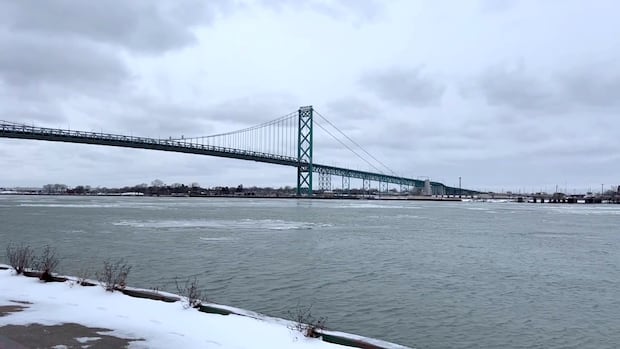
Despite the national decline in Canadian vehicle traffic, land crossings between Windsor, Ont., and Detroit experienced a less dramatic decrease. In 2025, around 3.4 million Canadian vehicles entered Canada through these crossings, down from 3.8 million in 2024, reflecting an 11% decrease.
Tal Czudner, CEO of the Windsor-Detroit Tunnel, reported a modest 4.5% decrease in traffic between 2024 and 2025, attributing the tunnel’s resilience to various factors, including cross-border employment and affordable tunnel tolls. Czudner also highlighted the enduring appeal of Detroit sports teams to the Windsor-Essex community, suggesting that sports loyalties sometimes outweigh economic considerations in travel decisions.
The local success story of the Windsor-Detroit Tunnel contrasts with the broader national trend of declining cross-border travel, underscoring the complex interplay of economic, cultural, and logistical factors influencing travel behaviors between Canada and the U.S.