
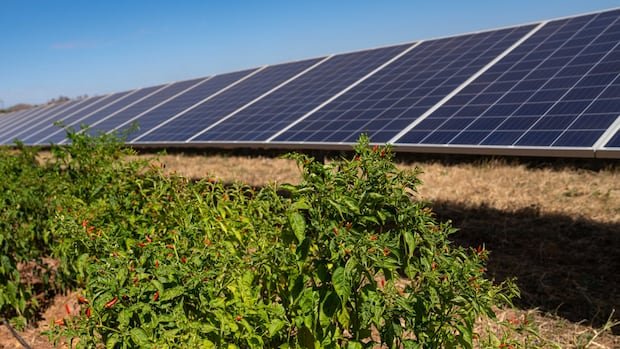
A popular restaurant chain’s spicy chicken features chili peppers that were also used by a Canadian company to construct Malawi’s initial solar power facilities. Toronto-based JCM Power, along with InfraCo Africa Ltd., developed the 60-megawatt Salima solar plant, marking Malawi’s first solar project in 2021. Following this, the Golomoti plant, equipped with a five-megawatt battery, became the first utility-scale project in sub-Saharan Africa to incorporate such storage technology. This initiative was crucial as less than 16% of Malawians had access to electricity as of 2023.
Before these projects, Malawi lacked regulations for solar ventures, making it a challenging market for JCM. Overcoming hurdles such as payment volatility in Malawian kwachas, JCM cleverly invested in community farming of African bird’s eye chili peppers near the solar installations. The peppers are sold in US dollars, primarily to Nando’s Peri-Peri, a popular chicken restaurant chain known for its signature hot sauce.
Africa boasts 60% of the world’s best solar resources, positioning it as a prime location for solar energy generation due to its favorable equatorial positioning with minimal dust and cloud cover. The continent aims to connect the 600 million people lacking electricity by 2030 to align with the UN’s universal access goal. Solar power witnessed a significant 54% growth in Africa in 2025, with installations rising notably in rooftop systems and utility-scale plants integrated into national grids.
Stardust Solar Energy, a Vancouver-based company, has ventured into Zambia with a 30-megawatt solar project through its local franchise, Megatricity Energy. This move aligns with Africa’s increasing reliance on private investments in solar projects to meet the rising power demand. The franchise model not only facilitates foreign financing but also empowers local businesses and communities by promoting sustainable solar practices.
Amid the solar energy boom in Africa, experts emphasize the importance of cautious and sustainable solar development to maximize benefits and minimize negative impacts. Development banks play a crucial role in promoting responsible solar projects that prioritize local agriculture, employment opportunities, and gender equality. Local community engagement and the development of local industries can contribute to sustainable solar deployment and attract more private investments in the sector.