
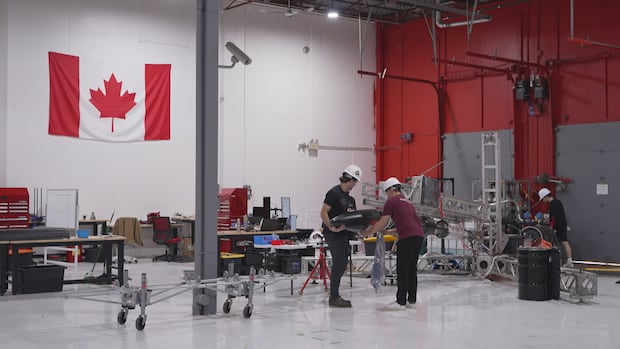
Canada, as the only G7 nation lacking its own rocket launch capabilities, is striving to develop a Canadian-made rocket. Several Canadian companies are in a race to provide the country with domestic access to space, amid concerns that industry giant SpaceX may reduce its launch services. The journey to space for these rocket companies is complex due to the high costs, tight deadlines, and shifting government priorities.
Since Canada currently lacks the ability to launch rockets, local customers, including private companies and government entities, rely on external providers to place their satellites into orbit, often turning to American companies like SpaceX. These satellites play crucial roles in various sectors such as telecommunications, military operations, and earth observation.
The Canadian government has recognized space as a critical sovereign capability and has introduced legislation to authorize launches from Canadian soil. Funding has been allocated to support the development of Canadian rocket capabilities, including investments in companies like NordSpace, Reaction Dynamics, and the newly established Canada Rocket Company.
NordSpace, founded in 2022, is working on building rockets and space technologies, with plans to attempt another rocket launch soon after a failed attempt in 2025. Reaction Dynamics is also developing unique engine designs with the goal of achieving orbit by 2028, aligning with government objectives.
Canada Rocket Company, led by CEO Hugh Kolias, aims to build a medium-lift rocket powered by methalox-fueled engines. The company has attracted private funding and is constructing a $30 million test facility to support its mission to reach space by 2032.
As SpaceX transitions to its Starship rocket, concerns arise about reduced access to its Falcon 9 rocket for satellite launches after 2028. This shift poses challenges for smaller players relying on SpaceX’s rideshare program. Canadian companies like Kepler, which heavily depend on the Falcon 9 for satellite launches, are exploring alternative launch providers like Rocket Lab.
The emergence of Canadian rocket makers like Canada Rocket Company presents an opportunity to fill the gap left by SpaceX’s Falcon 9 phaseout. However, challenges remain in securing sufficient funding and expertise to successfully launch rockets into orbit.
The road to achieving regular launches from Canada is a long-term endeavor that requires substantial investments and collaboration between public and private sectors. Despite the hurdles, the Canadian space industry is optimistic about its potential to establish a foothold in the global space market.