
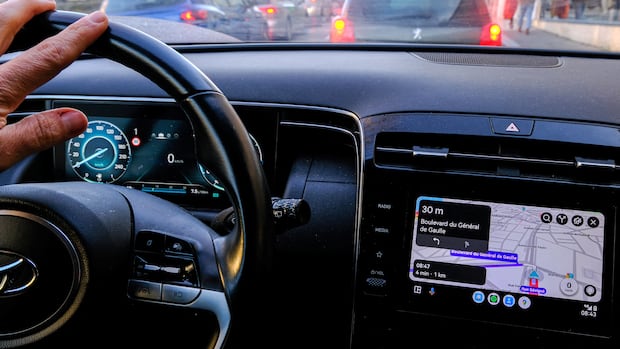
Tara McAndrew had a moment of realization while standing at the edge of a forest in Wellington, N.Z., instead of at the rental apartment she intended to visit. This led her to rethink her heavy reliance on GPS for navigation. Over the past ten years, the travel writer based in Ontario has traveled extensively worldwide. When arriving in a new city, she uses Waze or Google Maps for directions, but on the return journey, she opts for a more traditional approach.
McAndrew emphasizes the importance of balancing technology with cognitive skills, stating, “Tech has its place, but especially when it comes to travel, I’m very much about talking to people and getting lost and making mistakes.” While she may be an exception, statistics show that approximately two billion users monthly use Google Maps for navigation, with millions also utilizing Apple Maps or Waze.
Research indicates that getting lost can be beneficial for brain health, as reducing reliance on GPS can improve spatial memory. A study conducted at McGill University in 2020 revealed that habitual GPS users exhibited poorer spatial memory over time. Louisa Dahmani, a neuroscientist involved in the study, highlighted the importance of using cognitive skills for navigation to prevent atrophy of the hippocampus, the brain region responsible for spatial memory.
To preserve spatial memory and cognitive function, Dahmani recommends staying aware of surroundings even when using GPS and practicing navigation without technological aids. Brenda Holder, a Cree traditional knowledge keeper, also stresses the value of connecting with the environment and using natural cues for navigation, emphasizing the importance of not panicking when feeling lost.
As technology is not foolproof, there is a growing interest in reverting to older navigation methods in case of GPS failure. Authorities are exploring alternative technologies such as atomic clocks and celestial navigation to mitigate the risks associated with GPS disruptions. McAndrew acknowledges that her reliance on GPS has affected her ability to visualize her hometown, Kitchener, over the years, prompting her to reduce dependency on GPS tools during her travels.
McAndrew’s journey from relying on printed maps to embracing a more intuitive approach to navigation reflects a shift towards balancing technology with traditional skills. Embracing a mix of modern and traditional navigation methods can enhance spatial memory and foster a deeper connection with the environment.
For further insights on the topic, you can refer to the provided source.