
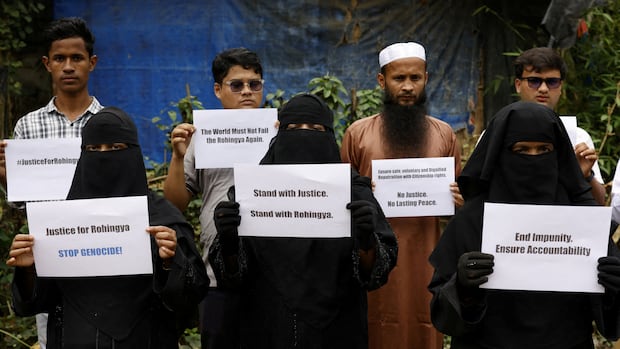
In a historic ruling, the highest court of the United Nations declared on Thursday that Myanmar engaged in genocide against the Rohingya minority during a violent military operation in 2017.
Yuji Iwasawa, President of the International Court of Justice, stated that the court reached a 9-6 verdict, determining that Myanmar “has committed genocide against the Rohingya group in northern Rakhine state, in breach of its responsibilities under the Genocide Convention.”
The court’s panel of 15 judges, which included Navi Pillay, a distinguished international legal expert who recently received the Nobel Peace Prize, dismissed Myanmar’s argument that the 2017 actions were a lawful counter-offensive against insurgents.
Iwasawa remarked that “the court finds that Myanmar’s security forces executed thousands of Rohingya civilians, committed widespread sexual violence, inflicted extreme violence on children, and assaulted fleeing Rohingya individuals as they attempted to escape in large groups.”
This ruling is significant as it represents the first instance where the court has held a state accountable for genocide.
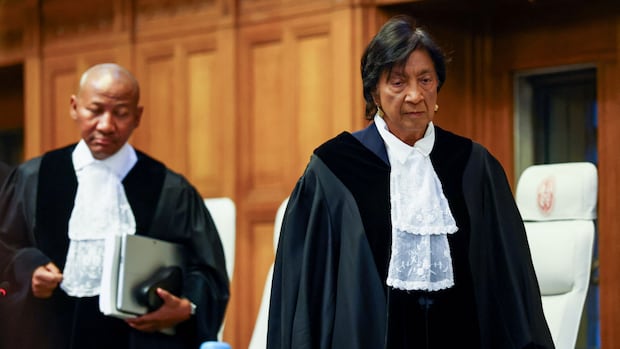
The International Court of Justice ruled on Thursday that thousands of killings and widespread sexual violence by Myanmar’s security forces against the Rohingya Muslim minority population in 2017 amounted to state-sponsored genocide, marking the first time the court has held a state, rather than an individual, responsible for genocide.
Yasmin Ullah, a Rohingya rights advocate who attended the three-hour session in the court’s Great Hall of Justice, expressed, “This is an important day for the Rohingya, and for all marginalized communities worldwide who have been made to feel that their pain is insignificant and that no one is paying attention.”
Establishing the intent to eliminate a group, either in whole or part, is a crucial aspect of determining whether actions constitute genocide under international law.
According to the court, evidence indicated that Myanmar’s military killed approximately 10,000 Rohingya individuals.
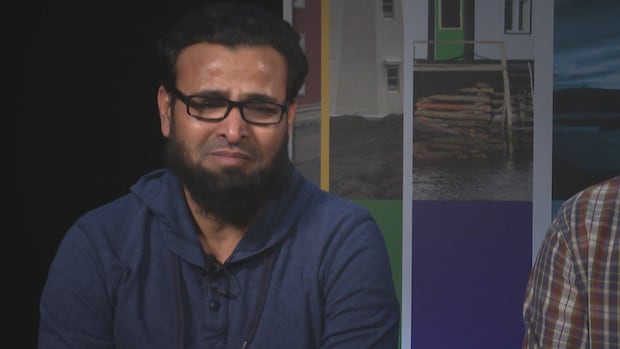
A ‘clearance operation’ carried out by the Myanmar military in 2017 saw the deaths of about 10,000 Rohingya people, and the displacement of more than 700,000. As Maddie Ryan reports, members of the community watched closely in the wake of landmark genocide hearings at the International Court of Justice last month.
UN Secretary-General Antonio Guterres described the ruling as “a manifestation of international justice and a reaffirmation that there can be no impunity for such atrocious acts.”
Following the announcement of the ruling, British Foreign Secretary Ed Miliband stated that his government would expel Myanmar’s defense attaché from the United Kingdom and “is urgently calling for a UN Security Council meeting to deliberate on the judgment.”
Over 1 million refugees
The Muslim-majority nation of Gambia initiated the proceedings at the International Court of Justice in 2019, requesting a ruling that Myanmar violated the 1948 Genocide Convention, demanded an end to any unlawful actions against the Rohingya, and sought punishment for those responsible for genocide.
In August 2017, Myanmar’s military launched what it termed a “clearance operation” in Rakhine state, claiming it was in response to an assault by a Rohingya insurgent group. This operation led to serious allegations of mass rapes, killings, and the destruction of thousands of homes.
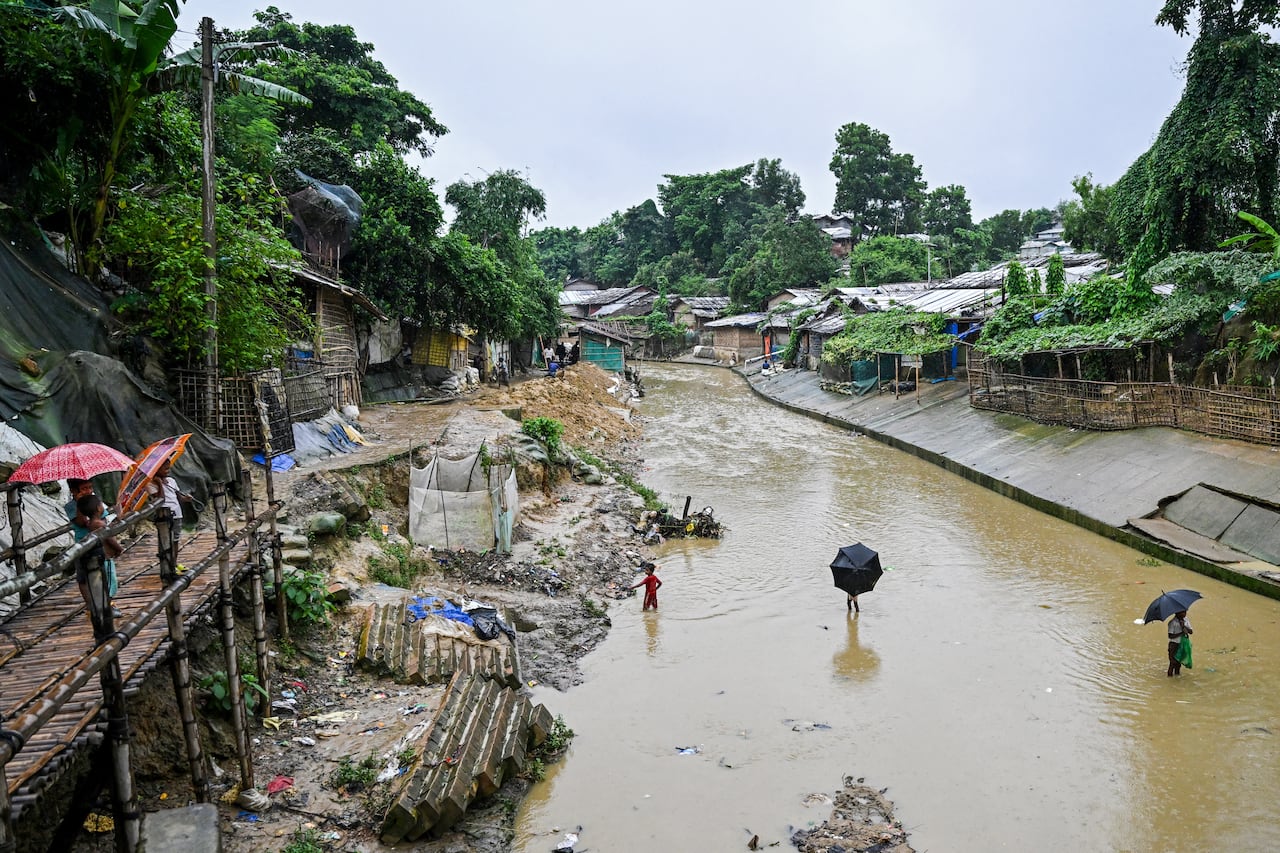
Rohingya children are seen wading through a flooded canal after heavy rain at the Kutupalong refugee camp in Bangladesh’s Cox’s Bazar on June 23. Thousands of Rohingya originally from Myanmar’s Rakhine state live in squalid conditions at Cox’s Bazar. (Munir Uz Zaman/AFP/Getty Images)
To prove that genocide occurred under the 1948 convention, the court must ascertain whether there was intent to annihilate the Rohingya “in whole or in part.”
Currently, around 1.2 million Rohingya refugees reside in Bangladesh, mostly in overcrowded camps in Cox’s Bazar district, where they confront dire living conditions, including risks from fires, the spread of infectious diseases, landslides during monsoon seasons, poor sanitation, and strict employment limitations.
“Genocides share common characteristics, so this ruling may influence other cases,” noted Melanie O’Brien, an international law professor at the University of Western Australia.
-
CBC Investigates
This Canadian family fuelled Myanmar’s civil war with ‘blood pearls’
-
‘Weaponization of aid’: Myanmar accused of blocking rescue efforts after deadly earthquake
Gambia has sought reparations for the Rohingya, including requests for Myanmar to confer full citizenship rights and allow them to return to their homeland.
Legally binding, but unenforceable
Yasmin Ullah, a Rohingya human rights advocate who fled Myanmar with her mother as a child in the 1990s, remarked that the demands in the Myanmar case stem from her community’s yearning for acknowledgment and dignity.
“So far, we have merely been relegated to a state of limbo,” she stated. “For nearly a decade, the Rohingya have been enduring extremely precarious conditions throughout the Asia-Pacific.”
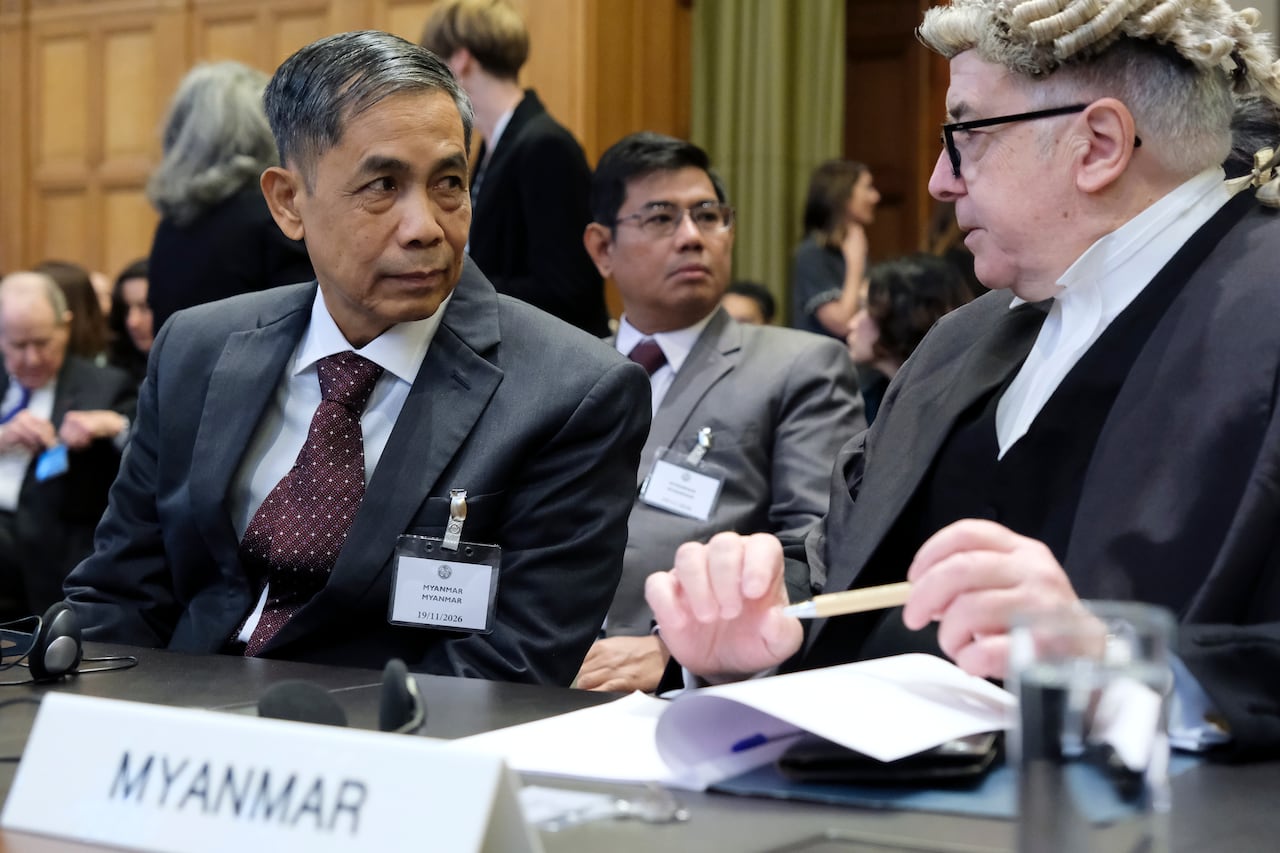
Ko Ko Hlaing, left, Myanmar’s minister of the president’s office, sits in the courtroom Thursday at The Hague, Netherlands. (Patrick Post/The Associated Press)
The rulings issued by the court are final and legally binding, yet it lacks mechanisms to enforce compliance, other than reporting violations to the UN Security Council.
In a prior ruling in 2007, the court found that Serbia “failed to prevent genocide” during the 1995 Srebrenica massacre, in which Bosnian Serb forces killed around 8,000 predominantly Muslim men and boys in the town.
Judges at the court based in The Hague have also been asked to evaluate other genocide claims.
-
What’s the difference between the ICC and the ICJ?
-
Bob Rae gives testimony on Rohingya plight, conditions at Cox’s Bazar
South Africa has accused Israel of violating the genocide convention during its military actions in Gaza, a claim that Israel categorically denies. That case remains years away from conclusion.
Ukraine also has a pending case against Russia. Following Moscow’s full-scale invasion in February 2022, Kyiv accused Russia of fabricating genocide accusations against Ukraine to legitimize the assault.

Tag: rewrite-pending