
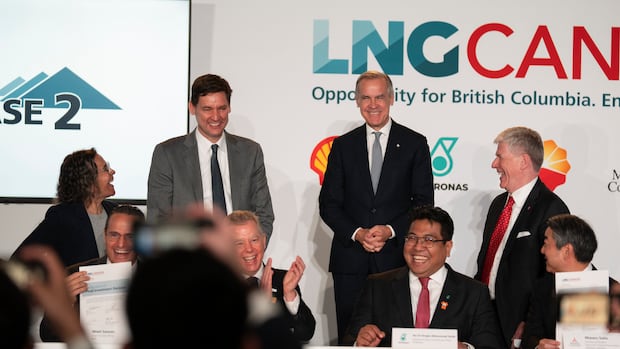
LNG Canada has confirmed the advancement of its Phase 2 expansion project in Kitimat, British Columbia, paving the way for a potential doubling of liquefied natural gas exports from the facility to global markets. The CEO of LNG Canada, Chris Cooper, emphasized the project’s significant job creation and its contribution to Canada’s energy sector.
According to Cooper, the collaboration among governments, First Nations partners, local communities, skilled trades, contractors, and investors has been instrumental in the success of LNG Canada Phase 2. The joint venture company comprises Shell, Petronas, PetroChina, Mitsubishi Corporation, and Korea Gas Corp. The Kitimat plant successfully shipped its inaugural LNG cargo to Asian markets last year.
During an event in Vancouver, Prime Minister Mark Carney praised the private sector investment of approximately $33 billion in LNG Canada’s Phase 2, positioning it as one of the world’s largest facilities of its kind. Carney highlighted the project’s potential to enhance Canada’s economic growth and create up to 4,000 new jobs in Kitimat during peak construction periods.
Despite the positive outlook on the project, skeptics have expressed concerns about the environmental impact of expanding LNG production, particularly in relation to greenhouse gas emissions. Critics worry about the potential acceleration of Canada’s emissions levels amidst a global climate crisis.
LNG, derived from natural gas extracted using techniques like hydraulic fracturing, is processed and transported in a cooled state for international consumption. The Phase 2 expansion is projected to double LNG production from 14 million to 28 million tonnes annually. Additionally, LNG Canada is collaborating with Coastal GasLink to enhance the capacity of the existing pipeline system by constructing new compressor stations across northern British Columbia.
While proponents view LNG as a cleaner alternative to coal and oil, opponents argue that the production process has significant energy requirements and environmental consequences. The debate surrounding LNG’s environmental impact persists, with concerns raised about seismic activity and heightened emissions associated with natural gas extraction in British Columbia.
The political landscape surrounding LNG expansion remains complex, with differing perspectives from various parties. The project’s national significance has garnered support from both provincial and federal governments, despite ongoing debates on the project’s environmental implications and Indigenous rights considerations.