
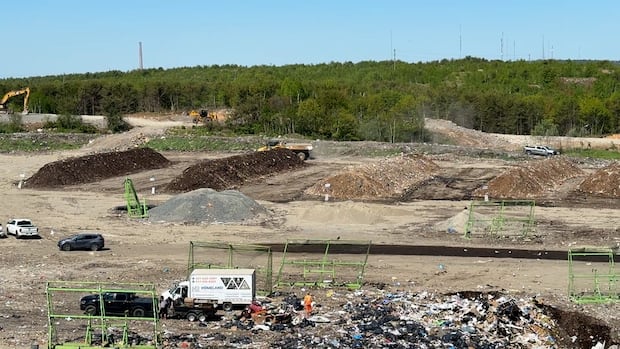
The City of Greater Sudbury predicts that its three landfills will reach full capacity in approximately 25 years unless there is a change in residents’ disposal habits. Renée Brownlee, the city’s environmental services director, highlighted that about 30% of landfill waste consists of organic materials that could be diverted to composting facilities. However, only 40% of eligible low-density households participate in the city’s green bin program.
Despite the green bin program’s inception in 2009, only 27% of eligible households engaged in 2018. Participation increased when the city implemented a two-bag limit for biweekly garbage collection, with green and blue bin pick-up occurring weekly.
Brownlee emphasized the need for increased organic waste diversion, stressing that community involvement is crucial. The city estimates that constructing a new landfill would cost a minimum of $200 million and necessitate approval from the Ontario Ministry of the Environment, Conservation, and Parks, a process that could span a decade. An incinerator, a pricier alternative, is being considered in Ottawa with a projected cost of $450 million.
Brownlee suggested that diverting all possible materials could double the landfill’s lifespan. To boost green bin participation, the city is contemplating two approaches. One option involves mandating clear garbage bags for household waste, a low-cost initiative that has proven successful in other areas. The second option is implementing a pay-per-use system where residents are charged for each garbage bag utilized.
Encouraging green bin usage is also crucial for reducing the city’s greenhouse gas emissions. Organic waste in landfills produces methane, a potent greenhouse gas. The city currently captures some methane at its primary landfill to generate electricity, but more efforts are needed to mitigate emissions. Finished compost undergoes rigorous testing for pathogens before being sold to the public for gardening purposes or repurposed for industrial use, such as assisting mining operations in managing their tailings.