
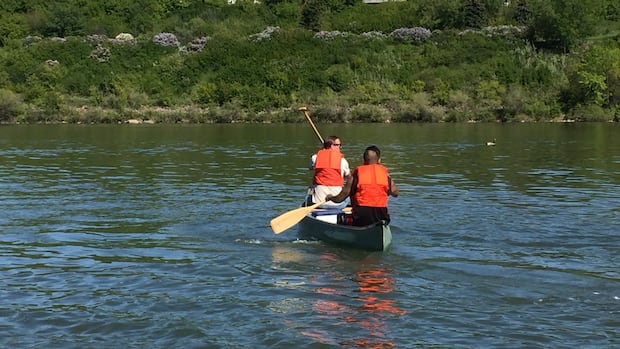
Saskatoon residents who enjoy water activities are accustomed to low levels on the South Saskatchewan River, but a significant snowmelt in the Rocky Mountains is anticipated to disrupt their summer plans. David Ukrainetz, an experienced rower, emphasizes the importance of maintaining the river at an optimal level to avoid safety hazards and navigational challenges. Last year’s low water levels caused various issues for watercraft users, including sandbar collisions and navigation difficulties.
The current water level is deemed favorable, but the impending surge of water from melting snow in the Alberta mountains poses potential risks, especially for inexperienced users who may not adhere to safety regulations. John Pomeroy, director of the University of Saskatchewan’s Centre for Hydrology, notes unprecedented snowpack depths in Alberta, with some areas exceeding four meters in depth. The significant snow accumulation has even damaged Pomeroy’s research equipment.
The snowmelt is already entering Lake Diefenbaker, which feeds into the South Saskatchewan River. The Water Security Agency reports a rapid increase in water flow into the lake, with flow rates expected to triple by the week’s end. The agency has increased water releases from the lake to manage the inflow effectively.
Approximately 60 to 80 percent of the stream in the Saskatchewan River basin is attributed to snowmelt, causing water levels to rise in May and June before receding in July and August. Mike Steckhan, the senior captain of the Prairie Lily ferry, advocates for raising the water level to facilitate operations and generate revenue. The ferry had to halt services last season due to low water levels and faced a similar situation this year.
Steckhan underscores the necessity of increasing water levels to enable smooth navigation and operational efficiency. The Prairie Lily remains docked due to insufficient water levels, highlighting the impact of fluctuating water levels on local water activities.