
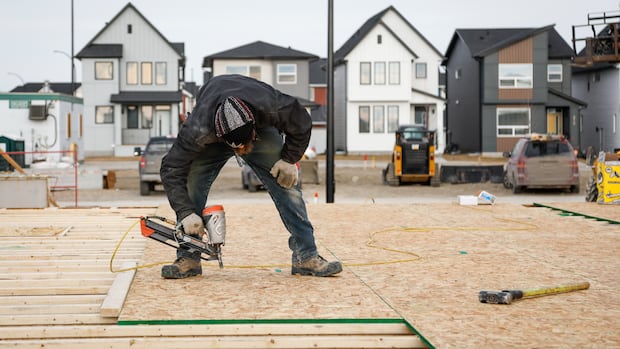
Alberta set new records in housing construction in 2025, leading the nation in housing starts per capita. This surge in homebuilding followed a significant period of population growth. Experts suggest that other Canadian cities could learn valuable lessons on increasing housing supply to meet demand.
In 2025, Alberta witnessed approximately 54,900 housing starts, marking a 15% increase from the previous year, as reported by the Canada Mortgage and Housing Corporation (CMHC). The province also experienced robust housing starts in 2024, with a 33% surge compared to 2023.
A provincial news release highlighted a notable increase in rental housing construction in Alberta, contributing to a decrease in rental prices compared to the national average. The construction boom in Alberta’s housing sector has historical parallels, with previous surges in building activity during the late 1970s and mid-2000s driven by growth in the oil and gas industry.
Housing commentator Mike Moffatt emphasized the importance of both demand and supportive policies in driving construction growth, citing past instances in the Greater Toronto Area where demand spikes did not translate into increased homebuilding. Alberta’s favorable geography, lower developer costs, and developer-friendly municipal policies have contributed to its success in housing construction.
Cities like Edmonton and Calgary are preferred by developers due to factors such as spread-out geography, absence of provincial sales tax, and lower municipal development fees. Edmonton and Calgary ranked highly in a 2024 study of Canadian municipalities based on affordability and ease of construction, in contrast to cities like Vancouver and Toronto.
Various federal policies, such as the removal of GST on purpose-built rental housing and discounted mortgage insurance programs, have further incentivized housing construction in Alberta and other regions. Despite some challenges and resistance to certain policies, Alberta’s housing market continues to grow, with ongoing population growth projected to drive sustained demand for housing in the province.