
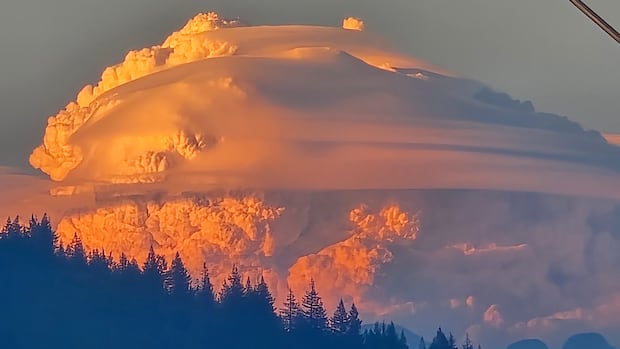
Photos of massive cauliflower-shaped clouds have been surfacing on social media in the Vancouver area, identified by experts as pyrocumulus clouds formed by a wildfire over 200 kilometers away. The B.C. Wildfire Service confirmed that the Anderson Creek fire was spotted by aircraft responding to nearby fires, rapidly intensifying due to strong winds.
Meteorologist Matt Loney from Environment Canada explained that each fire generates significant heat, with the Anderson Creek fire exhibiting rapid growth. Social media circulated images of towering cumulus clouds above dark smoke plumes, captured from locations as distant as Coquitlam, approximately 220 kilometers away.
Loney elaborated that any source of intense heat producing convection currents triggers the formation of these clouds, caused by hot air rising swiftly and condensing moisture. He likened the process to opening a freezer door on a scorching summer day, where fog descends due to the temperature difference.
The clouds consist of various particulates like burning embers, dust, and ashes, visible to the naked eye. Once reaching a certain temperature level, they spread horizontally. The vertical growth of the cloud from the Boston Bar-area fire indicates both extreme heat intensity and atmospheric instability.
Rachel White, an assistant professor at the University of British Columbia specializing in atmospheric sciences, expressed admiration and concern for the impressive cloud formations in the Fraser Canyon region. She highlighted the potential for these pyrocumulus clouds to trigger thunderstorms with lightning, posing a risk of further wildfires.
White emphasized the dangerous aspect of lightning generation by these clouds, dependent on specific conditions in the area. Witnessing the power of wildfires through these phenomena is both scientifically intriguing and unnerving, according to White.
Overall, the occurrence of pyrocumulus clouds serves as a visual representation of the intensity and impact of wildfires, demonstrating the complex relationship between fire, weather, and the environment.