
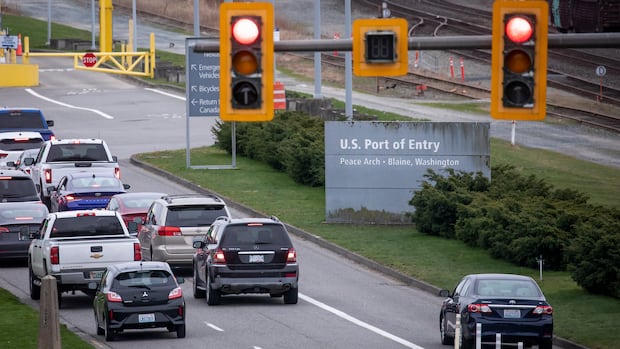
A continuing trend in 2025 shows British Columbians are opting to stay north of the Washington state border, causing concerns for border towns reliant on Canadian visitors for their livelihood. Data from the Whatcom Council of Governments, located along the northwest Washington state border, reveals a significant 35% decrease in southbound border crossings by B.C. vehicles in 2025 compared to the previous year. This decline in Canadian travel southward began early in 2025 and persisted throughout the year.
Businesses in towns like Blaine, Wash., have been significantly impacted by the reduced Canadian traffic, with closures of parcel businesses and decreased activity at gas stations. Various factors are cited for the decline, including the unfavorable exchange rate with the U.S. dollar and the absence of a consumer carbon tax making gas prices more competitive in Canada.
Blaine Mayor Mary Lou Steward attributes the drop in Canadian visitors to a loss of trust in Americans, stemming from the tariff war and annexation threats made by U.S. President Donald Trump. Steward acknowledges the challenge of rebuilding this trust and suggests that border towns should have diversified their economies earlier.
Despite efforts to encourage Canadian visitors, the situation has been described as an “absolute collapse” in cross-border travel by Blaine-based immigration lawyer Len Saunders. Negative rhetoric from the U.S. federal government towards Canadians, coupled with stories of incidents involving federal immigration agents, have further deterred Canadian travel southward.
Laurie Trautman, director of the Border Policy Research Institute at Western Washington University, notes the long-term impact of the diminished B.C.-Washington state border crossings and emphasizes the importance of maintaining strong cross-border relationships despite the reduced physical crossings.