
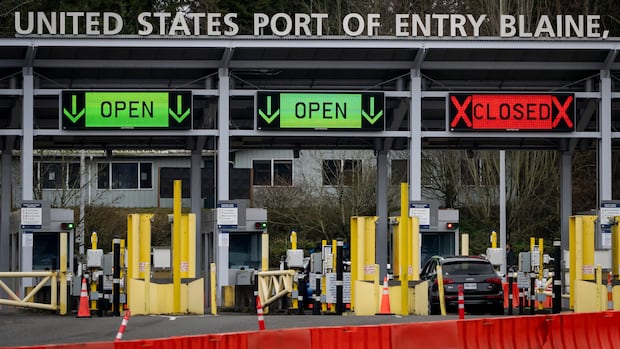
A recent congressional committee report reveals that the decline in Canadian tourism to the United States due to President Donald Trump’s policies is negatively impacting American businesses across several states, especially those along the U.S.-Canada border. The report, produced by the Democrat minority of the joint economic committee of the U.S. Congress, highlights the significant economic contributions of Canadian tourism to the U.S., amounting to $20.5 billion in 2024 and supporting 140,000 American jobs.
The report points out that President Trump’s tariff measures, including discussions of annexing Canada, imposing tariffs on Canadian goods, and disrupting trade negotiations, have severely affected states along the border. This disruption has strained diplomatic, economic, and trade relations between the two countries, resulting in a direct hit to U.S. businesses that rely on Canadian visitors.
According to the report, the number of Canadian passenger vehicles crossing the border between January and October saw a nearly 20% decrease compared to the previous year. This decline varied from over 10% in Alaska to more than 28% in Vermont. Businesses in these regions are reporting reduced tourists, increased vacancies, and lower sales, highlighting the tangible impact of the tourism downturn.
Senator Maggie Hassan, a Democrat from New Hampshire and ranking member of the committee, emphasized the adverse effects of Trump’s policies on American businesses that have long benefited from Canadian tourism. The report includes state-specific data and testimonials from various business owners, illustrating the widespread repercussions of the Canadian travel boycott on U.S. border states.
In response to the declining Canadian visitors, some businesses have witnessed significant drops in revenue and bookings. For instance, in New Hampshire, Canadian visitations decreased by 30%, while reservations at state-run campgrounds plummeted by 71% in the initial months of 2025. The situation is similar in Maine, where border crossings and business for the CAT Ferry service saw notable declines.
The report also highlights the impact in Montana, where Canadian visitors contributed substantially to the state economy but saw a significant drop in border crossings and cancellations affecting local businesses. Other states like Washington and New York experienced decreases in visitor numbers and business layoffs, attributed to the ongoing political climate and tariff policies.
Business owners, such as Christa Bowdish of the Old Stagecoach Inn in Vermont, expressed concerns about the long-term repercussions of the tourism decline, fearing that it may drive Canadians to explore alternative destinations. The report underscores the enduring consequences of strained U.S.-Canada relations and emphasizes the need for efforts to restore the once-thriving tourism relationship between the two nations.