
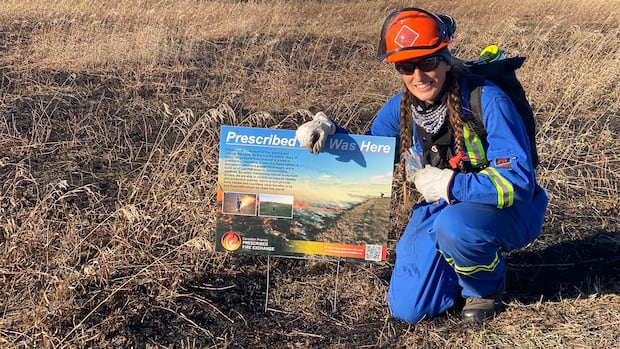
Saskatchewan wildfires have caused significant damage, but many experts believe that controlled prescribed fires can be beneficial for maintaining the health of the prairies. Samantha Gunn, an educator at the Brightwater Science, Environmental, and Indigenous Learning Centre near Saskatoon, shared with CBC’s Blue Sky how prescribed fire has been integrated into the center’s educational programs and management of its native prairie lands.
“We are committed to understanding the Prairie we inhabit, with fire being a natural component of this ecosystem,” Gunn explained. Planned burns consider various factors such as wind conditions, temperature, humidity, seasonality, and time of day to ensure safe and effective outcomes.
Renny Grilz, a resource management officer at the Meewasin Valley Authority, acknowledged the devastation caused by uncontrolled fires but emphasized the potential of utilizing fire to manage grassland ecosystems safely. Prescribed burns can help eliminate pests, rejuvenate food sources, and enhance areas for food cultivation.
Grilz, a founding member of the Canadian Prairies Prescribed Fire Exchange (CPPFE), highlighted the importance of educating the public, landowners, and managers on the benefits of controlled fires. He also mentioned the cultural significance of fire in Indigenous land management practices for maintaining healthy grasslands.
In collaboration with Gunn in 2019, CPPFE facilitated training and provided necessary resources for introducing prescribed burns at Brightwater. Following two successful prescribed fires, the practice became integral to the community’s land management approach.
Gunn stressed the significance of having a trained team’s support in conducting prescribed burns. This initiative has not only enriched the educational experience at Brightwater but has also inspired students from various grade levels to engage actively in community initiatives.
The program’s success has even motivated some students to consider pursuing a career in fire management. Gunn expressed enthusiasm about the positive impact of the program, emphasizing how students have realized their potential to contribute to environmental conservation efforts.