
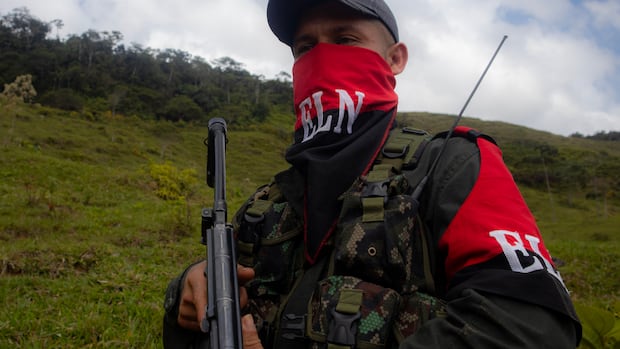
Local security experts are concerned about the impact of the recent U.S. attack on Venezuela on guerrilla groups operating along the country’s border with Colombia. Following the Jan. 3 attacks, reports have emerged of increased guerrilla movements on both sides of the border. The National Liberation Army (ELN), the region’s most powerful guerrilla group, has allegedly closed some camps in Venezuela out of fear that regime officials may betray their locations to U.S. authorities.
According to armed conflicts and national security expert Jorge Mantilla from Bogotá, the ELN is reevaluating its security measures and social control systems in certain Venezuelan communities where their leaders are present. The ELN has also halted training operations and the development of a special forces unit in Venezuela with the assistance of the Venezuelan military.
Mantilla mentioned that the ELN had foreseen a potential U.S. attack in Venezuela, as evidenced by past warnings and statements made by ELN leaders. The attack could potentially allow the ELN to expand its influence and become a continental guerrilla force if the U.S. military intervenes in Venezuela or if the Venezuelan regime fractures.
Meanwhile, Ivan Mordisco, a leader of a group that split from the Revolutionary Armed Forces of Colombia (FARC), has urged guerrilla groups to unite with the Venezuelan military against the U.S. However, Gerson Arias from Colombia’s Ideas for Peace Foundation doubts that Mordisco’s call will be heeded due to lack of trust and Mordisco’s criminal status.
The ELN, with an estimated force of 6,000 to 8,000 members and control over 1,200 kilometers of borderlands, operates in Colombia and Venezuela, focusing on illegal mining and the drug trade for revenue. The group has historical ties with the Venezuelan regime, aligning with its political ideology and supporting the Bolivarian Revolution.
Recent discussions between U.S. President Donald Trump and Colombian President Gustavo Petro have centered on cooperation to combat the ELN. However, human rights advocate Eliana Paola Zafra in Cúcuta, Colombia, emphasizes the need for a comprehensive peace strategy in Latin America that prioritizes human rights and community empowerment over military intervention.