
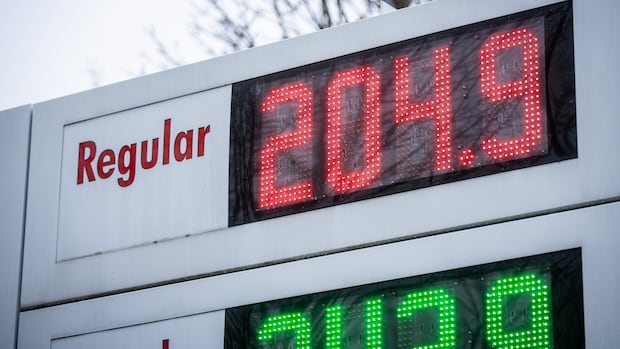
Gas prices are on the rise throughout Canada, with certain regions in British Columbia experiencing some of the highest prices in the nation, exceeding $2 per liter in specific areas. The Canadian Automobile Association (CAA) reported that the average price of regular gasoline nationwide was approximately $1.64 per liter on Monday, a figure significantly lower than the average in Vancouver, where it stood at around $2.02 per liter. According to GasBuddy.com, the average gas price in all of British Columbia was $1.863 per liter on Monday, with the cheapest rates found in Creston at $1.549 per liter.
Global spikes in gas prices have been attributed to disruptions in the Middle East due to ongoing conflicts, particularly affecting the supply chain through critical passages like the Strait of Hormuz. Analysts anticipate that the current situation will persist, causing gas prices to continue climbing in the upcoming days. Matt McClain, an analyst at Gas Buddy, forecasts an increase of approximately five to six cents per liter for both gasoline and diesel.
Although Canada has its own oil and gas production, it is interconnected with the global market, making its pricing susceptible to international events. The ongoing standstill in the Strait of Hormuz is causing a significant impact, holding back about 20% of the global oil and gas supply, leading to escalated prices for the remaining 80%.
When faced with escalating gas prices, drivers often seek ways to reduce their gas consumption. McClain advises individuals to consider refueling in suburban or rural areas where gas prices are typically lower compared to urban centers. Additionally, the CAA recommends adopting fuel-saving practices such as smooth acceleration, reducing speed, and combining trips to minimize gas usage.
The soaring gas prices may be steering consumers towards electric vehicles, as highlighted by Doug Beckett, founder of the Prince George Electric Vehicle Association. While some drivers are paying over $2 per liter in Vancouver, Beckett notes that he spends roughly 18 cents per liter to operate his electric vehicle, indicating potential cost savings.
The implications of high gas prices extend beyond individual consumers, affecting businesses reliant on shipping services. The average cost of diesel in British Columbia was around $2.22 per liter on Monday, impacting various sectors such as trains, barges, and trucks that heavily rely on diesel fuel for operations. Mike Millian, president of the Private Motor Truck Council of Canada, warns that the escalating fuel costs could lead to the closure of some businesses, exacerbating economic challenges within the industry.
Overall, the surge in gas prices presents challenges not only for consumers but also for businesses dependent on transportation services, signaling potential economic repercussions in the near future.