
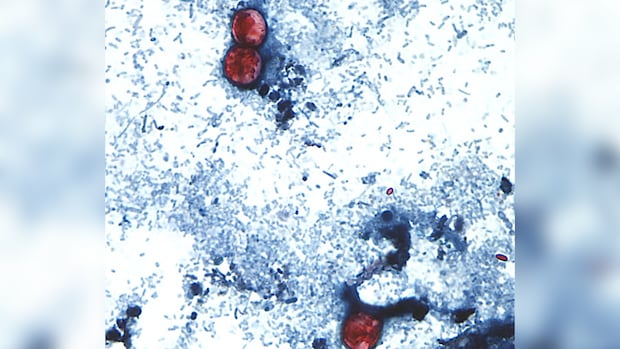
An outbreak of a parasite causing diarrhea has been spreading across the United States, affecting over 1,000 individuals and leading to hospitalizations for dozens. The infections of cyclospora, known for symptoms like watery diarrhea, bloating, fever, and nausea, have been reported in multiple states. Although cyclospora cases are typical during the spring and summer, this outbreak is unusually large, marking one of the country’s most significant incidents with no reported fatalities.
The Public Health Agency of Canada stated that they are not investigating any outbreaks related to this parasite in Canada. Cyclospora, a microscopic parasite, typically results in watery diarrhea and can be treated with antibiotics. It is commonly transmitted through fresh produce like berries and lettuce that may have been exposed to feces-contaminated irrigation water.
Experts suggest that the outbreak may be linked to imported produce from regions such as South and Central America, the Caribbean, Southeast Asia, or Africa. Although the exact cause of the outbreak remains unknown, symptoms can appear up to two weeks after exposure and persist for up to two months. Cyclospora is less common than other foodborne illnesses like salmonella and E. coli, with recent increases attributed to climate change and improved detection methods.
Michigan has seen a significant rise in cases, with 1,251 reported infections and 36 hospitalizations. Nearby Lucas County, Ohio, has reported 306 cases, while over 400 cases have been recorded in northwest Ohio. Apart from these areas, 28 other states, including Illinois and New York, are also investigating cases. Despite challenges in tracing the source of the outbreak, health officials emphasize the importance of careful handling of fresh produce.
Although the outbreak has not been declared a national health emergency, health experts confirm that there is no evidence of increased infectivity in the parasite. While the outbreak primarily affects the U.S., Canada has had an average of 238 cyclosporiasis cases annually between 2004 and 2019. Travelers are advised to be cautious when consuming fresh produce, opt for cooked or peeled fruits, and seek medical attention if they suspect infection. Washing produce may not eliminate the parasite entirely, and certain precautions, such as removing outer lettuce leaves or freezing fruit, are recommended but not foolproof.