
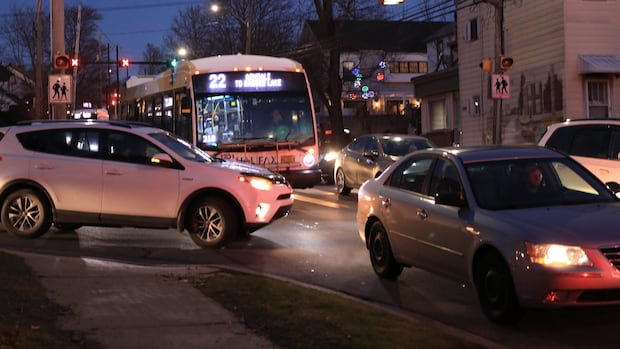
New data released by TomTom reaffirms the ongoing struggle with traffic congestion in Halifax, positioning the city center as the third most congested area in Canada for the second consecutive year, trailing behind Vancouver and Toronto.
According to the annual traffic index from TomTom, Halifax saw an average congestion level of around 45% in 2025, resulting in drivers spending an additional 111 hours in rush-hour traffic. This figure remained unchanged from the previous year, indicating a consistent issue with traffic flow in the city.
Ahsan Habib, a transportation professor at Dalhousie University, noted that the data aligns with predictions made by the Dalhousie Transportation Collaboratory (DalTRAC), forecasting an increase in traffic volumes due to population growth and a return to in-person work settings.
With Halifax’s population growing by over 60,000 people since 2021 and limited access points to the urban core, such as the harbour bridges and Windsor Street exchange, Habib emphasized the necessity of a significant shift towards transit to alleviate congestion. Despite longstanding discussions around transit improvements, the reliance on private vehicles remains high in Halifax, with only a small percentage opting for public transportation.
Deputy Mayor Patty Cuttell echoed the urgency for enhanced transit options, emphasizing the need for rapid bus systems to address the frustrations of delayed buses and traffic congestion. Efforts are underway to secure provincial and federal funding to support these initiatives, including the implementation of adaptive signal technology and high-occupancy vehicle lanes.
While long-term projects like the Windsor Street exchange redesign and a rail shuttle system are expected to provide relief by 2028, immediate actions such as pilot rapid bus routes are being considered to kickstart transit enhancements in Halifax. The city’s ranking as the 147th most congested city globally underscores the pressing need for effective traffic management strategies.
Public Works Minister Fred Tilley emphasized the importance of modernizing traffic management systems to accommodate the region’s growth, highlighting the role of timely information in improving daily commutes. As Halifax navigates the challenges of increasing congestion, collaborative efforts between government entities and community stakeholders are crucial in implementing sustainable transportation solutions for the future.