
Welcome to our weekly update focusing on environmental advancements shaping a more sustainable world. In a recent development of Prime Minister Mark Carney’s nature strategy, the integration of artificial intelligence (AI) caught attention for its potential impact on conservation efforts. Let’s delve into how various sectors, including conservation, are leveraging AI technology.
This week’s highlights include the potential of AI in conservation work, the significance of wind energy, and the innovative collaboration between Parks Canada and social media influencers in influencing visitor behavior in Banff.
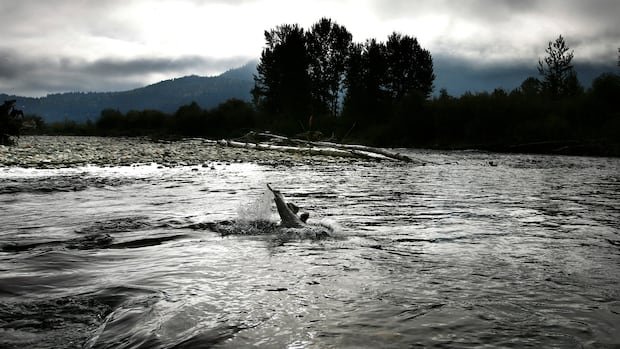
AI is revolutionizing conservation practices by enabling continuous monitoring of phenomena such as salmon migration through camera systems. This technology facilitates the assessment of population numbers without the need for labor-intensive manual review of extensive footage. Alemu Gonsamo, based at McMaster University, utilizes AI alongside satellite and aerial imagery to analyze Canada’s landscapes, including tree counts and carbon storage assessments in remote areas. The incorporation of AI in Canada’s new nature strategy, announced by Prime Minister Carney, is crucial for expanding protected areas and restoring ecosystems.
Gonsamo, the Canada Research Chair in remote sensing of terrestrial ecosystems, collaborates with organizations like the World Wildlife Fund Canada and Indigenous communities to study carbon storage in Canadian soils, particularly focusing on carbon-rich peatlands in Northern Ontario. By combining data from satellite sensors and leveraging machine learning algorithms, Gonsamo’s team efficiently processes vast amounts of information. Through innovative techniques, such as utilizing only 500 ground measurements to estimate peat depth across the Hudson Bay Lowlands, AI plays a pivotal role in advancing conservation research.
This integration of AI technology heralds a new era in conservation practices, offering efficient solutions to monitor and protect ecosystems for a sustainable future.